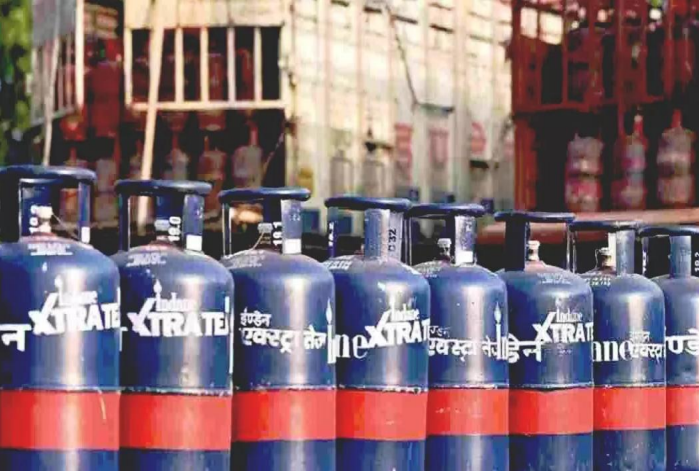
India’s commercial cooking fuel costs have risen sharply after oil marketing companies increased the price of 19-kg commercial LPG cylinders by ₹115 from March 7, a move that is expected to impact restaurants, hotels, catering businesses and other food service establishments across the country. According to revised price notifications issued by state-owned oil companies such as Indian Oil Corporation (IOC), Bharat Petroleum Corporation Ltd (BPCL) and Hindustan Petroleum Corporation Ltd (HPCL), the new rates came into effect immediately across major cities.
In the national capital Delhi, the price of a commercial LPG cylinder rose to around ₹1,883, while in Mumbai the price increased to about ₹1,835, reflecting a significant rise in operational costs for the hospitality and food service sector. Similar increases were reported in other major metropolitan areas including Kolkata and Chennai, where the revised rates crossed the ₹1,900 mark depending on local taxes and distribution costs.
The price revision follows global fluctuations in energy markets and adjustments made by oil marketing companies to align domestic commercial LPG rates with international fuel prices.
While the increase does not directly affect household cooking gas used under the 14.2-kg domestic LPG cylinder category, industry stakeholders say the move could still have indirect consequences for consumers as businesses adjust prices to manage higher operating costs.
Energy Pricing and LPG Market Dynamics
India’s LPG pricing framework is influenced by several factors including international crude oil prices, exchange rate movements and the cost of importing petroleum products. Commercial LPG cylinders used by restaurants and businesses are typically priced according to market conditions, unlike domestic cylinders which are partially subsidised under government welfare schemes.
The country remains heavily dependent on imported energy resources, with over 85% of its crude oil requirements sourced from overseas markets, making domestic fuel prices sensitive to global energy trends. When international crude prices rise or shipping costs increase, oil marketing companies often adjust the price of LPG and other petroleum products to maintain financial stability.
Commercial LPG is widely used in India’s food service ecosystem, including restaurants, roadside eateries, bakeries, hotels, industrial kitchens and catering services. According to industry estimates, millions of commercial establishments across the country rely on LPG as a primary cooking fuel because it provides consistent heat, efficient combustion and easy storage compared with alternative fuels.
Impact on Restaurants, Hotels and Small Businesses
The increase in commercial LPG prices is expected to place immediate pressure on India’s hospitality and food service sector, particularly small and medium-sized businesses operating on thin profit margins. Restaurant associations say fuel costs represent a significant portion of operational expenditure for many establishments, especially those that rely on multiple LPG cylinders every week.
Industry representatives warn that continued increases in cooking fuel prices could force restaurants and eateries to reconsider menu pricing or reduce operating costs in other areas. Many small establishments already face rising expenses related to raw materials, transportation, electricity and labour, making additional fuel costs difficult to absorb without passing some of the burden to consumers.
Hotel and catering operators have also expressed concern that rising LPG costs could affect large-scale food preparation operations. Banquet services, corporate catering companies and event management firms often rely on multiple commercial cylinders to handle large cooking requirements, meaning price increases can significantly affect their overall cost structure.
Government Policy and Domestic LPG Subsidy Framework
While commercial LPG prices are market-linked, domestic LPG cylinders used in households operate under a different pricing framework influenced by government subsidy policies. The Pradhan Mantri Ujjwala Yojana (PMUY), launched in 2016, provides subsidised LPG connections to low-income households, helping expand access to clean cooking fuel across rural and economically weaker communities.
Under the scheme, millions of families receive support to purchase LPG cylinders at reduced prices. According to official government data, the programme has helped distribute over 9 crore LPG connections to beneficiaries across India, significantly reducing reliance on traditional biomass fuels such as firewood and coal for cooking.
Because domestic LPG cylinders fall under the government’s welfare framework, price revisions in the commercial LPG segment do not automatically translate into higher household fuel costs. However, policymakers remain mindful of the broader economic impact of rising energy prices, particularly as inflation and cost-of-living concerns continue to influence economic policy decisions.
Energy Inflation and Broader Economic Concerns
Energy economists note that increases in commercial LPG prices can contribute to broader inflationary pressures in the economy, particularly in sectors related to food services and hospitality. When cooking fuel costs rise, businesses may adjust prices for prepared food, restaurant meals and catering services, indirectly affecting consumer spending patterns.
India’s inflation trajectory remains closely linked to energy prices because petroleum products influence transportation costs, manufacturing expenses and logistics networks. Any sustained rise in energy prices can therefore have cascading effects across supply chains, affecting both producers and consumers.
Financial analysts also point out that the government and central bank closely monitor energy price movements as part of their broader macroeconomic policy framework. The Reserve Bank of India (RBI) has frequently highlighted the importance of managing fuel-driven inflation risks to maintain price stability and support economic growth.
Outlook
The latest increase in commercial LPG cylinder prices reflects the continuing influence of global energy markets on India’s domestic fuel economy. While the price adjustment directly affects businesses rather than households, the ripple effects are likely to be felt across the hospitality and food service industry as companies adjust to higher operational costs.
In the short term, restaurants and catering operators may attempt to absorb part of the cost increase to remain competitive, though some establishments could revise menu prices if fuel expenses continue to rise. The broader economic impact will depend largely on how global energy prices evolve in the coming months.
Looking ahead, policymakers will continue balancing energy market realities with economic stability and consumer protection. As India’s economy expands and demand for cooking fuel grows, managing energy affordability while ensuring reliable supply will remain a key priority for both the government and the country’s energy sector.