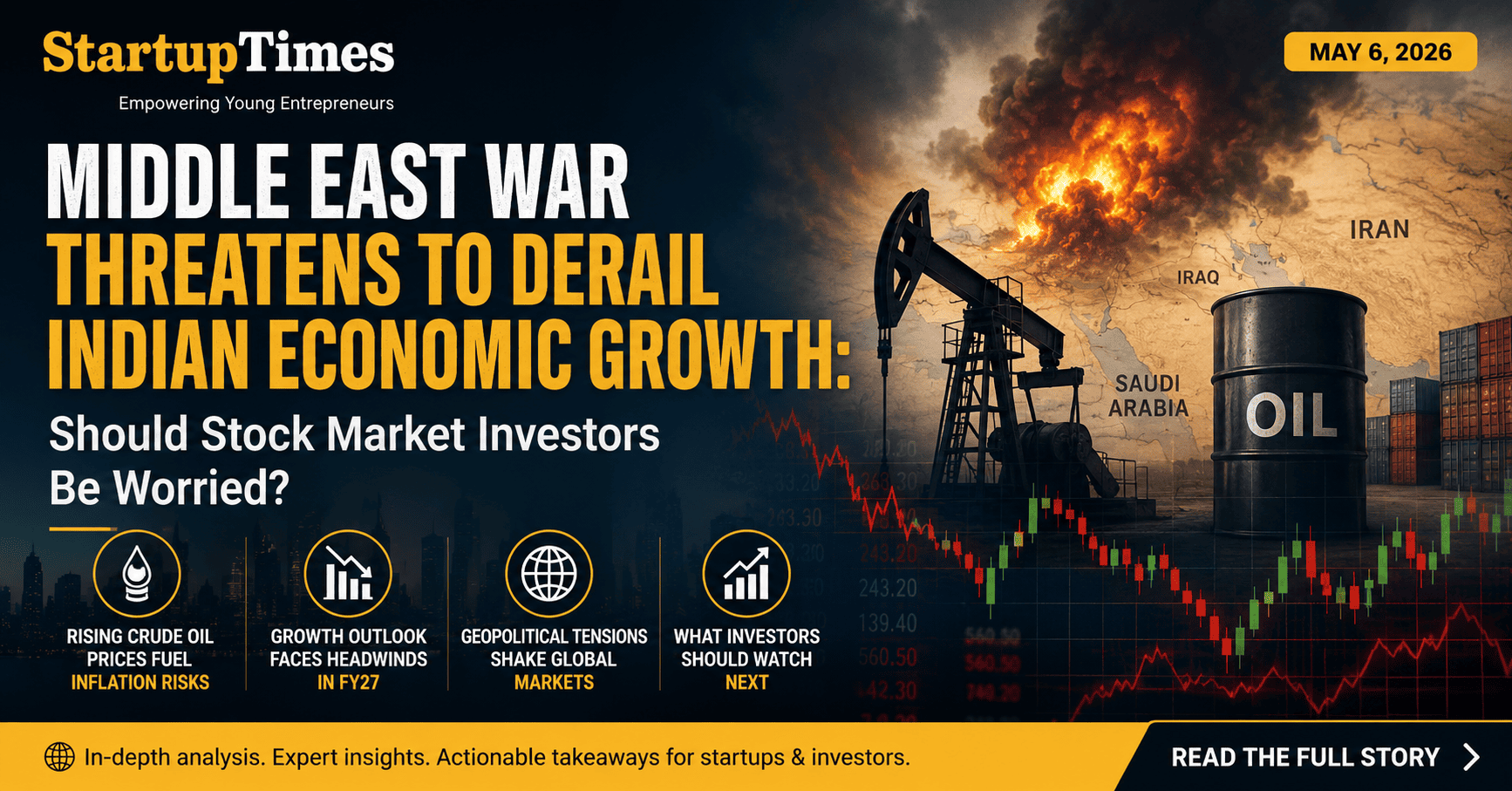
The ongoing geopolitical tensions in the Middle East are beginning to cast a shadow over India’s economic momentum in 2026. With crude oil prices crossing the $100 per barrel mark and uncertainty around the Strait of Hormuz continuing, economists, investors, and startup founders are closely monitoring the situation.
India, one of the world’s fastest-growing major economies, relies heavily on imported crude oil. Any disruption in global energy supply chains directly impacts inflation, logistics, manufacturing, transportation, and consumer spending. Experts now believe that prolonged instability in the Middle East could slow India’s GDP growth, increase operational costs for businesses, and create volatility in the stock market.
Why the Middle East Crisis Matters to India
The Middle East region plays a critical role in global energy supply. Any conflict involving major oil-producing nations affects crude oil prices worldwide. India imports a large portion of its oil requirements, making it vulnerable to fluctuations in international energy prices.
Higher crude oil prices often lead to:
- Increased fuel and transportation costs
- Higher inflation across industries
- Reduced consumer purchasing power
- Pressure on startup operating margins
- Increased logistics and manufacturing expenses
- Volatility in stock and investment markets
For startups and businesses operating in sectors like logistics, mobility, manufacturing, agriculture, aviation, and e-commerce, rising fuel prices can significantly impact profitability.
Impact on India’s Startup Ecosystem
India’s startup ecosystem has been one of the strongest drivers of innovation and employment over the last decade. However, global economic disruptions can create new challenges for emerging businesses.
1. Funding Slowdown
When geopolitical tensions rise, investors generally become more cautious. Venture capital firms and angel investors may slow down funding activities, especially for early-stage startups. Businesses without strong revenue models could face difficulties raising capital.
2. Higher Operational Costs
Startups dependent on transportation, delivery, imports, or manufacturing may witness a sharp increase in operational expenses due to rising fuel and raw material costs.
3. Consumer Spending Pressure
As inflation increases, consumers tend to reduce discretionary spending. This may impact sectors like D2C brands, lifestyle startups, food delivery platforms, travel companies, and luxury services.
4. Tech and SaaS Opportunities
Interestingly, economic uncertainty may also create opportunities for technology and SaaS companies. Businesses often shift toward automation, AI solutions, and cost-efficient digital tools during uncertain periods. Indian SaaS startups could benefit by offering scalable and affordable solutions globally.
Experts Warn of Slower GDP Growth
Several economists and financial institutions have revised India’s growth projections amid ongoing global tensions. While India is still expected to remain among the fastest-growing economies, GDP growth estimates for FY27 are being moderated.
According to reports, prolonged disruption in oil supply routes and continuously elevated crude prices could reduce India’s economic growth by up to 25–35 basis points. fileciteturn0file0
Financial experts also believe that sectors highly dependent on imports and fuel consumption could face increased pressure throughout the financial year.
Indian Stock Market Faces Volatility
The Indian stock market has already started reacting to geopolitical developments. Analysts believe that elevated oil prices, a weakening rupee, and global uncertainty may lead to increased market volatility in 2026.
Investors are expected to remain cautious toward:
- Aviation stocks
- Logistics companies
- Automobile manufacturers
- Import-heavy businesses
- Fuel-dependent industries
At the same time, sectors like renewable energy, defence technology, AI, cybersecurity, and domestic manufacturing could attract stronger investor interest.
Opportunities Amid Challenges
Despite the uncertainty, India’s economic fundamentals remain relatively strong compared to many global economies. The country continues to benefit from:
- A large consumer market
- Strong digital infrastructure
- Rapid startup innovation
- Government support for entrepreneurship
- Growing manufacturing initiatives
- Expanding global technology adoption
For startups, this period could become an opportunity to focus on sustainable growth, operational efficiency, and innovation-led business models.
How Startups Can Prepare for Economic Uncertainty
Indian startups can take proactive measures to navigate the ongoing economic environment:
Optimize Cash Flow
Maintaining healthy cash reserves and reducing unnecessary expenditures can help startups survive periods of uncertainty.
Focus on Profitability
Investors are increasingly prioritizing sustainable and profitable businesses over aggressive cash-burning models.
Diversify Revenue Streams
Companies should explore multiple revenue channels and reduce dependence on single markets or suppliers.
Invest in Technology
Automation, AI, and digital transformation tools can improve efficiency and reduce operational costs.
Strengthen Customer Retention
In uncertain markets, retaining existing customers often becomes more valuable than rapid customer acquisition.
India’s Long-Term Growth Story Remains Strong
While the Middle East conflict may create short-term challenges, India’s long-term economic and entrepreneurial growth story remains intact. The country continues to emerge as a global innovation hub, attracting startups, investors, and multinational corporations.
Experts believe that once geopolitical tensions ease and crude oil prices stabilize, India could quickly regain stronger economic momentum.
For founders, investors, and entrepreneurs, the key lies in adaptability, resilience, and strategic decision-making.
Conclusion
The ongoing Middle East tensions have undoubtedly introduced uncertainty into the global economy. Rising crude oil prices, inflation concerns, and market volatility may impact India’s growth trajectory and startup ecosystem in the short term.
However, India’s strong digital economy, growing innovation landscape, and resilient entrepreneurial ecosystem position the country to navigate these challenges effectively.
As businesses adapt to changing market conditions, startups that prioritize efficiency, innovation, and sustainability are likely to emerge stronger in the years ahead.