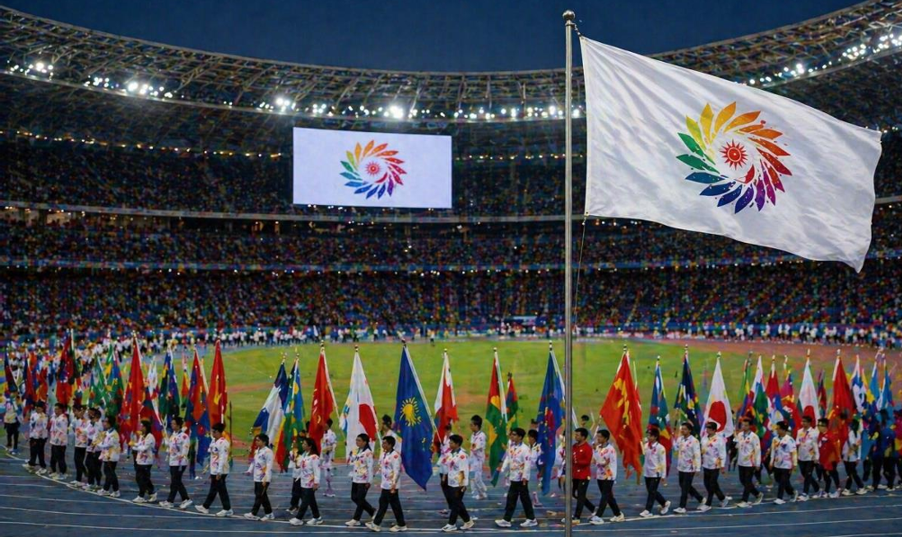
India has taken another decisive step in its long-term sporting strategy by formally expressing interest in hosting the 2038 Asian Games, with Ahmedabad emerging as the proposed host city.
The move reflects a broader national ambition to position India as a global destination for mega sporting events, building on a structured roadmap that includes the 2030 Commonwealth Games and a bid for the 2036 Olympic Games.
The Indian Olympic Association (IOA), led by President P. T. Usha, confirmed that the country has already submitted its Expression of Interest to the Olympic Council of Asia (OCA), marking the beginning of a competitive international bidding process. This step signals India’s growing confidence in its ability to host large-scale global events and highlights Ahmedabad’s emergence as the centerpiece of this vision.
The timing of the bid is significant. India is undergoing rapid transformation in sports infrastructure, urban development, and global positioning. Hosting successive mega-events is being seen not merely as symbolic prestige, but as a strategic tool to accelerate economic growth, enhance international standing, and build a robust sporting ecosystem.
Strategic Vision Behind the 2038 Asian Games Bid
India’s bid for the 2038 Asian Games is not an isolated initiative but part of a carefully sequenced strategy. Officials view the event as a natural progression following the country’s successful bid to host the 2030 Commonwealth Games, also in Ahmedabad. This layered approach allows infrastructure, logistics, and governance frameworks to be developed incrementally rather than from scratch.
According to IOA leadership, the Olympic Council of Asia has responded positively to India’s initial outreach, and an evaluation delegation is expected to visit the country to assess readiness. This indicates that India’s proposal is being taken seriously at the international level, strengthening its credibility as a future host nation.
The long-term objective extends beyond a single event. Hosting the Asian Games is viewed as a critical stepping stone toward securing the 2036 Olympic Games. By aligning multiple bids around a single city and infrastructure ecosystem, India aims to maximize efficiency and create a sustainable model for hosting global sporting events.
Ahmedabad as the Emerging Sports Capital
Ahmedabad has rapidly emerged as the focal point of India’s sporting ambitions. The city’s selection is driven by its growing infrastructure, strategic planning, and government backing. With major projects already underway for the 2030 Commonwealth Games, Ahmedabad is being transformed into a world-class sports and urban hub.
The development includes large-scale investments in stadiums, transportation networks, accommodation facilities, and urban infrastructure. The Narendra Modi Stadium, already one of the largest cricket stadiums in the world, is expected to play a central role in upcoming events. These developments are designed not only to meet international standards but also to create a lasting legacy for the city.
Moreover, Ahmedabad’s integration with nearby Gandhinagar as a twin-city model enhances its capacity to host large events. This approach allows for distributed infrastructure, improved logistics, and efficient crowd management, positioning the region as a viable contender for multiple global sporting events.
Economic and Infrastructure Implications
Hosting major sporting events has significant economic implications, and India’s multi-event strategy is expected to drive large-scale investment and job creation. Preparations for the 2030 Commonwealth Games alone are projected to generate tens of thousands of jobs and stimulate infrastructure development across the Ahmedabad-Gandhinagar region.
The economic impact extends beyond construction and event management. Increased tourism, global visibility, and foreign investment are expected to boost local and national economies. Sporting events of this scale often act as catalysts for urban transformation, improving connectivity, housing, and public services.
Additionally, the reuse of infrastructure across multiple events is expected to reduce costs and improve efficiency. Officials have noted that hosting the Asian Games in 2038 would be more economical due to the infrastructure already developed for earlier events. This approach reflects a shift toward sustainable event planning, where long-term benefits outweigh short-term expenditures.
Global Positioning and Sporting Diplomacy
India’s push to host the Asian Games and Olympics is also a strategic move in the realm of global diplomacy. Mega sporting events provide a platform for nations to showcase their capabilities, culture, and economic strength on the international stage.
By hosting successive global events, India aims to strengthen its soft power and enhance its influence in international sports governance. Engagement with organizations such as the International Olympic Committee (IOC) and the Olympic Council of Asia is a critical component of this strategy, enabling India to play a more active role in shaping global sporting policies.
At the same time, the bid reflects growing competition among nations to host major events. Countries across Asia and beyond are investing heavily in sports infrastructure, making the bidding process increasingly competitive. India’s ability to secure these events will depend on its capacity to demonstrate readiness, sustainability, and effective governance.
Conclusion
India’s decision to bid for the 2038 Asian Games marks a significant milestone in its journey toward becoming a global sports powerhouse. By aligning its ambitions across multiple events and focusing on a single host city, the country is adopting a strategic and sustainable approach to event hosting.
Looking ahead, the success of this initiative will depend on effective execution, transparent governance, and the ability to deliver world-class infrastructure. The upcoming evaluation process by the Olympic Council of Asia will be a crucial test of India’s readiness and commitment.
Ultimately, the bid represents more than just a sporting ambition—it is a reflection of India’s broader aspirations on the global stage. As the country continues to invest in sports, infrastructure, and international engagement, its vision of becoming a leading host of global events is steadily taking shape.