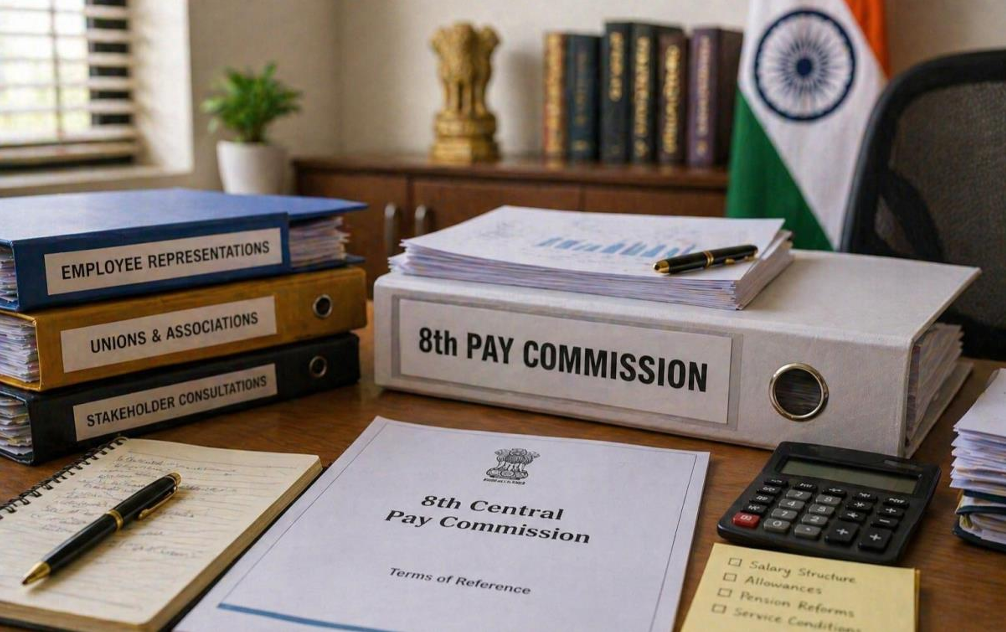
India’s 8th Central Pay Commission has moved into a decisive consultation phase, marking a critical step in shaping the future pay structure, allowances, and pension framework for millions of government employees and retirees. Established through a formal notification in November 2025, the commission has now begun actively engaging with stakeholders across the country to gather inputs before drafting its recommendations.
This phase represents the most participatory stage of the pay revision process, where voices from employee unions, ministries, pensioners, and experts are being consolidated. The government has opened multiple channels—including digital questionnaires, regional consultations, and formal memoranda submissions—to ensure wide representation in the decision-making process.
The outcome of the 8th Pay Commission holds substantial economic and administrative importance. It is expected to impact over 1.2 crore employees and pensioners, influencing consumption, fiscal expenditure, and broader economic dynamics.
Consultation Process Gains Momentum
The consultation phase has formally gathered pace with the commission initiating structured interactions with stakeholders. Meetings have been scheduled in major centres such as New Delhi (April 28–30, 2026) and Pune (May 4–5, 2026), where employee unions, associations, and representatives are invited to present their views.
In parallel, the commission has also leveraged digital platforms to widen participation. A detailed questionnaire was released through official channels and the MyGov portal, inviting responses from employees, pensioners, academic experts, and even individual contributors. The submission deadline was extended to ensure broader engagement and inclusivity.
These consultations are not merely procedural but foundational. Inputs collected during this phase will directly influence policy recommendations related to pay scales, allowances, service conditions, and pension reforms. The process reflects a deliberate effort to ensure transparency and inclusiveness in a policy decision that affects a large segment of the population.
Key Stakeholders and Their Demands
A diverse range of stakeholders is actively participating in the consultation process. Central government employee unions, pensioners’ associations, ministries, and regulatory bodies have all been invited to submit their views and demands.
Among the most prominent demands are proposals for significant salary revisions, including calls for higher minimum pay and revised fitment factors. Some employee groups have suggested raising the minimum salary substantially to better reflect inflation and living costs, while others have emphasized improvements in allowances and pension parity.
Unions have also highlighted structural concerns such as the merging of dearness allowance with basic pay and restoring real wage growth. These demands underscore broader issues related to cost-of-living adjustments, economic fairness, and workforce morale within the public sector.
Timeline, Structure and Operational Framework
The 8th Pay Commission operates within a structured timeline designed to balance consultation, analysis, and implementation. Following its constitution in November 2025, the commission began operations in early 2026 and has been given approximately 18 months to submit its final report.
The commission is chaired by Justice Ranjana Prakash Desai, with members including Prof. Pulak Ghosh and Pankaj Jain, bringing together expertise in governance, economics, and administration.
While the effective date for revised pay structures is expected to be January 1, 2026, actual implementation may occur later, potentially leading to arrears payments for employees and pensioners.
Economic and Policy Implications
The recommendations of the 8th Pay Commission will have far-reaching implications for India’s economy and public finances. A revision in salaries and pensions for millions of employees is expected to significantly boost consumption demand, particularly in urban and semi-urban areas.
At the same time, the fiscal impact on the government is substantial. Higher wage bills and pension liabilities will require careful budgeting and may influence broader fiscal policy decisions. The government will need to strike a balance between employee welfare and fiscal sustainability.
Moreover, the pay commission’s recommendations often set benchmarks for state governments and public sector undertakings, amplifying their impact across the broader economy. This makes the consultation phase even more critical, as it lays the foundation for decisions that extend beyond the central government workforce.
Conclusion and Outlook
As the 8th Pay Commission progresses through its consultation phase, it stands at a pivotal juncture in shaping India’s public sector compensation framework. The extensive engagement with stakeholders reflects a commitment to inclusivity and evidence-based policymaking.
In the coming months, the commission will analyze the inputs received and begin drafting its recommendations. The final report, expected within the next 18 months, will determine the future trajectory of salaries, pensions, and allowances for millions of individuals.
Ultimately, the success of the process will depend on its ability to balance competing priorities—ensuring fair compensation for employees while maintaining fiscal discipline. As expectations remain high, the consultation phase represents both an opportunity and a responsibility to craft a sustainable and equitable pay structure for the future.