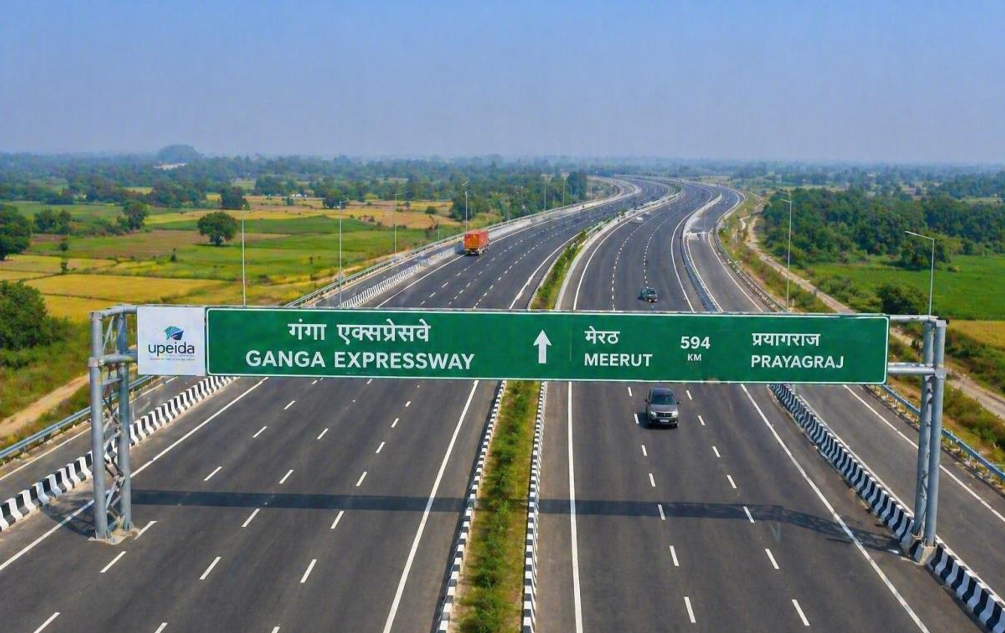
India marked a significant milestone in infrastructure development as Prime Minister Narendra Modi inaugurated one of the country’s longest expressways, a nearly 600-kilometre corridor spanning Uttar Pradesh, connecting key economic regions across the state. The project, valued at approximately $4 billion (₹36,000+ crore), reflects the government’s continued push toward modernising transport networks and strengthening economic connectivity.
The expressway—popularly known as the Ganga Expressway—links Meerut in western Uttar Pradesh to Prayagraj in the east, traversing 12 districts and integrating multiple regional economies into a single high-speed corridor. Designed as a six-lane access-controlled highway, with provisions for expansion to eight lanes, the project is being described as a transformational initiative for India’s most populous state.
Beyond its physical scale, the expressway represents a broader policy vision: leveraging infrastructure as a catalyst for economic growth, industrial expansion, and regional development. As India accelerates investments in highways, railways, and logistics corridors, projects like this underline the strategic importance of connectivity in sustaining long-term growth.
Scale, Design and Key Features of the Expressway
The Ganga Expressway stands out not only for its length but also for its advanced design and infrastructure capabilities. Stretching approximately 594–600 kilometres, it is among the longest greenfield expressways in India, constructed entirely from scratch rather than upgrading existing roads.
The project has been developed with modern engineering features, including high-speed travel lanes, emergency response infrastructure, rest areas, and provisions for electric vehicle charging. It also includes a unique emergency airstrip, enabling military aircraft landings in times of crisis—highlighting the dual-use strategic importance of the corridor.
Designed for speeds of up to 120 km/h, the expressway significantly enhances travel efficiency. The corridor reduces travel time between Meerut and Prayagraj from nearly 8–9 hours to around 6 hours, marking a substantial improvement in intercity mobility.
Economic Impact and Industrial Growth Potential
The expressway is expected to serve as a major economic engine for Uttar Pradesh, facilitating faster movement of goods, reducing logistics costs, and attracting industrial investments. Estimates suggest that the project could generate up to 3 lakh jobs, both directly and indirectly, during and after its construction phase.
The Uttar Pradesh government has positioned the corridor as an industrial growth belt, planning the development of multiple industrial clusters along the route. These clusters are expected to support manufacturing, warehousing, and logistics operations, thereby boosting regional economic activity.
Additionally, improved connectivity is likely to enhance agricultural supply chains, enabling farmers to transport produce more efficiently to markets. This could reduce wastage, improve price realisation, and strengthen rural economies across the state.
Regional Connectivity and Social Transformation
One of the most significant impacts of the expressway lies in its ability to bridge regional disparities within Uttar Pradesh. By connecting western, central, and eastern parts of the state, the corridor facilitates greater economic integration and mobility.
The expressway passes through over 500 villages, improving access to urban centres, healthcare facilities, educational institutions, and employment opportunities. This enhanced connectivity is expected to contribute to social development and improved quality of life for residents in previously underserved regions.
Furthermore, the project strengthens connectivity with existing and upcoming infrastructure networks, including other expressways and national highways. This integrated approach creates a seamless transportation ecosystem, enhancing both passenger travel and freight movement.
Strategic Importance and Future Expansion Plans
Beyond economic and social benefits, the expressway holds strategic importance in India’s broader infrastructure and defence planning. The inclusion of an emergency airstrip reflects a growing emphasis on dual-use infrastructure that can support both civilian and military operations.
During the inauguration, Prime Minister Modi also announced plans to extend the expressway to Haridwar, further enhancing connectivity between Uttar Pradesh and Uttarakhand. This extension is expected to boost tourism, particularly religious tourism, by improving access to key pilgrimage destinations.
The project also aligns with India’s larger vision of developing high-speed transport corridors across the country, supporting initiatives such as industrial corridors, logistics parks, and multimodal transport systems.
Conclusion
The inauguration of the Ganga Expressway marks a defining moment in India’s infrastructure journey, underscoring the government’s commitment to large-scale development projects aimed at driving economic growth and regional integration.
As India continues to invest heavily in infrastructure, the success of such projects will depend on their ability to deliver long-term economic benefits, attract investment, and improve living standards. The Ganga Expressway, with its scale, design, and strategic vision, represents a step in that direction.
Looking ahead, the project is expected to play a crucial role in shaping Uttar Pradesh’s economic landscape, transforming it into a more connected, competitive, and investment-friendly region. In a broader context, it reflects India’s ambition to build world-class infrastructure capable of supporting its growth aspirations in the decades to come.