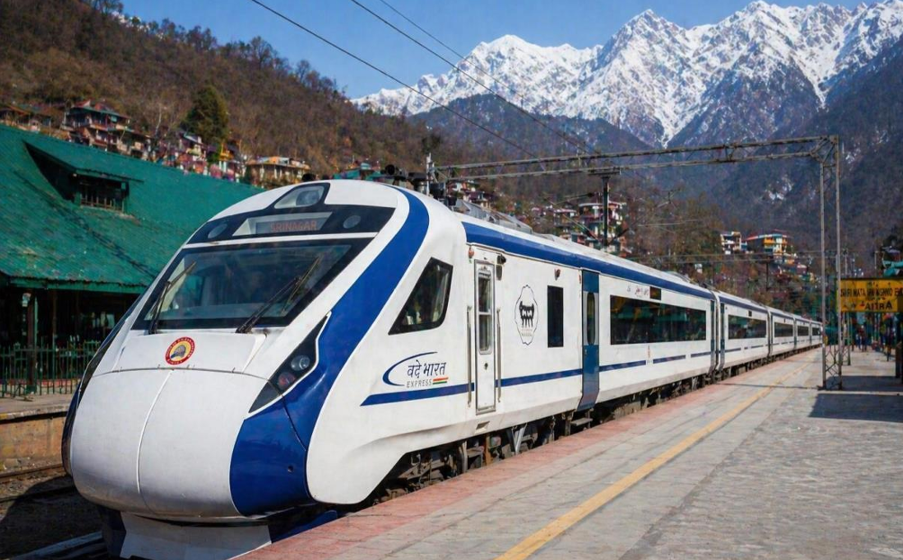
India is set to witness a transformative milestone in its railway and regional connectivity landscape with the launch of the Jammu–Srinagar Vande Bharat Express on April 30, 2026. The new high-speed train service will directly connect the winter capital Jammu with the summer capital Srinagar, significantly reducing travel time and enhancing accessibility across Jammu & Kashmir.
The introduction of this service marks the extension of the existing Vande Bharat network into one of the most geographically challenging and strategically important regions of the country. The journey, which previously took approximately 8 to 9 hours by road depending on terrain and weather conditions, will now be completed in around 5 hours, offering faster, safer, and more reliable transportation.
This development is not merely an infrastructural upgrade but a critical step in strengthening national integration, boosting tourism, and facilitating economic activity in the Kashmir Valley. With the government placing strong emphasis on connectivity in border and sensitive regions, the Jammu–Srinagar Vande Bharat represents a strategic and symbolic advancement in India’s infrastructure ambitions.
Strategic Importance of the Jammu–Srinagar Rail Link
The Jammu–Srinagar Vande Bharat service is a crucial component of India’s long-standing effort to integrate Jammu & Kashmir more seamlessly with the rest of the country. The region’s difficult terrain, frequent landslides, and weather-related disruptions have historically posed challenges to road connectivity, making reliable transport infrastructure a national priority.
The railway link forms part of the broader Udhampur–Srinagar–Baramulla Rail Link (USBRL) project, which aims to provide all-weather connectivity to the Kashmir Valley. By extending the Vande Bharat service to Jammu, Indian Railways is bridging a key gap in the network, enabling direct access without the need for transfers at intermediate stations like Katra.
From a strategic standpoint, improved connectivity enhances mobility not only for civilians but also for logistics and administration. The railway line strengthens the government’s ability to maintain consistent connectivity in a region that has historically been isolated during adverse weather conditions, thereby reinforcing both economic and national security objectives.
Operational Details and Technological Advancements
The Vande Bharat Express operating on the Jammu–Srinagar route is equipped with advanced technology designed to function in extreme climatic conditions, including sub-zero temperatures and heavy snowfall. This makes it particularly suited for the Kashmir Valley, where winter conditions often disrupt conventional transportation systems.
The train will cover a distance of approximately 266 kilometers in under five hours, with scheduled stops at key stations such as Katra and Banihal. The service has undergone multiple trial runs to ensure safety, reliability, and operational efficiency, with authorities confirming that all preparations—including security arrangements—are complete.
The inauguration is expected to be led by Railway Minister Ashwini Vaishnaw, along with Union Minister Jitendra Singh, highlighting the importance of the project at the national level. The deployment of modern rolling stock, combined with improved track infrastructure, positions this service as one of the most advanced rail operations in the country.
Economic Impact and Tourism Boost
One of the most immediate and visible impacts of the new train service will be on tourism in Jammu & Kashmir. The Kashmir Valley, known for destinations such as Gulmarg, Pahalgam, and Sonamarg, attracts millions of tourists annually. Improved connectivity is expected to significantly enhance tourist inflow by making travel more convenient and predictable.
The reduced travel time and increased comfort offered by the Vande Bharat Express are likely to encourage more domestic travelers to visit the region. Additionally, the service will benefit pilgrimage tourism, particularly for routes associated with the Vaishno Devi shrine and the Amarnath Yatra, where reliable transport is essential.
Beyond tourism, the train is expected to stimulate local economies by facilitating the movement of goods and people. Improved connectivity can lead to increased investment, better market access for local businesses, and the creation of employment opportunities, thereby contributing to the region’s overall economic development.
Infrastructure Development and Regional Integration
The launch of the Jammu–Srinagar Vande Bharat is part of a broader push toward infrastructure development in India’s northern regions. Significant investments have been made in tunnels, bridges, and rail networks to overcome the challenges posed by the Himalayan terrain.
This project complements other landmark developments such as the Chenab Bridge—the world’s highest railway bridge—and the Anji Khad Bridge, both of which are integral to the USBRL project. These engineering feats have enabled the realization of a rail network that was once considered technically unfeasible.
By improving connectivity, the government aims to integrate Jammu & Kashmir more closely with the national economy. Enhanced transportation links facilitate the movement of resources, improve access to services, and strengthen socio-economic ties, contributing to long-term stability and development in the region.
Conclusion
The launch of the Jammu–Srinagar Vande Bharat Express represents a defining moment in India’s infrastructure and connectivity journey. By reducing travel time, improving reliability, and enhancing comfort, the service addresses long-standing challenges associated with transportation in Jammu & Kashmir.
Looking ahead, the success of this initiative will depend on consistent operations, maintenance, and further expansion of the rail network. As connectivity improves, the region is likely to witness increased economic activity, greater tourist inflow, and stronger integration with the rest of the country.
Ultimately, the Jammu–Srinagar Vande Bharat is more than just a train service—it is a symbol of progress, resilience, and national commitment to inclusive development. As India continues to invest in infrastructure, such projects will play a pivotal role in shaping the country’s economic and strategic future.