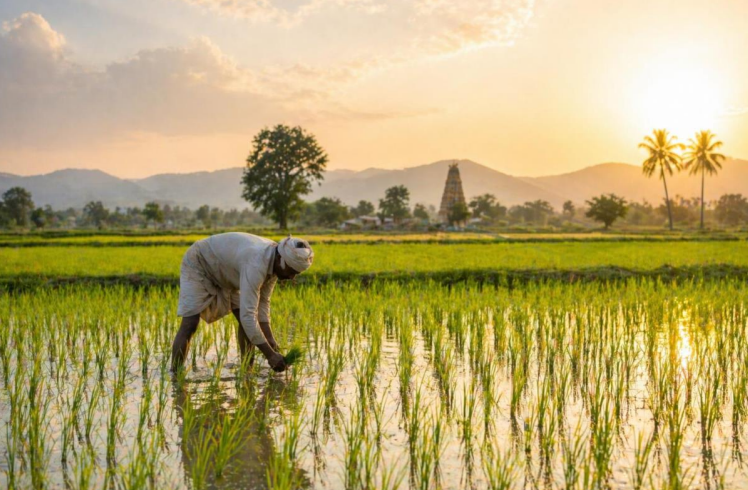
India’s agricultural backbone is facing a mounting climate threat as a joint report by the Food and Agriculture Organization and World Meteorological Organization warns that intensifying heatwaves could severely disrupt rice production across the country.
The report highlights the Indo-Gangetic plains—one of the most densely populated and agriculturally vital regions—as particularly vulnerable to extreme temperature spikes, raising alarms over national food security and rural livelihoods.
The findings arrive at a time when climate variability is already beginning to influence agricultural outcomes in India. Rising temperatures, erratic rainfall patterns, and increasing frequency of extreme weather events have started to erode productivity in key crop cycles. The FAO–WMO report emphasizes that heatwaves are no longer isolated climatic events but systemic risks that are reshaping agricultural ecosystems.
This development holds profound implications for India, where rice is not only a staple food but also a key component of economic stability. Millions of farmers depend on rice cultivation for their livelihood, and any sustained decline in output could ripple across food supply chains, inflation, and rural incomes. The warning signals a critical juncture where climate change is directly intersecting with national economic and social priorities.
Heatwaves and the Growing Climate Threat
The FAO–WMO report identifies extreme heat as a “risk multiplier” that amplifies existing vulnerabilities in agricultural systems. Rising temperatures have become more frequent, intense, and prolonged over the past decades, significantly increasing stress on crops, livestock, and farm workers.
In the context of India, the Indo-Gangetic basin—covering large parts of northern India—is expected to face the most severe impact. These regions are already characterized by high population density and intensive farming, making them particularly susceptible to climate shocks. Heatwaves in these areas can reduce soil moisture, disrupt crop cycles, and increase water demand, creating a cascading effect on agricultural productivity.
Moreover, the impact of heat is not limited to crops alone. Agricultural labor productivity is projected to decline sharply under extreme conditions, with some estimates suggesting that effective working capacity could drop below 40% in peak heat scenarios. This dual impact—on both crops and labor—poses a compounded risk to the agricultural sector.
Impact on Rice Production and Food Security
Rice, being a temperature-sensitive crop, is particularly vulnerable to heat stress. Scientific evidence suggests that crop yields begin to decline once temperatures exceed critical thresholds—often around 30°C for major staples. In India’s rice-growing regions, such conditions are becoming increasingly common during key growth stages.
The FAO–WMO report specifically highlights that heatwaves could significantly reduce rice yields in the Ganga and Indus basins, which together account for a substantial share of India’s total production. Any decline in output from these regions would have immediate implications for national food availability, given the scale of dependence on these agricultural zones.
The broader food security implications are equally concerning. Reduced rice production could lead to higher prices, increased import dependence, and pressure on government food distribution systems. For a country with a large population dependent on subsidized food programs, such disruptions could strain public finances and exacerbate inequality.
Economic and Rural Livelihood Implications
The economic consequences of heat-induced agricultural stress extend far beyond crop yields. Agriculture remains a major source of employment in India, and disruptions in this sector directly impact rural incomes and consumption patterns. A decline in productivity could reduce farm earnings, affecting millions of households across the country.
Historical data already points to the vulnerability of Indian agriculture to heat events. For instance, previous heatwaves have caused significant yield losses in crops such as wheat, with reductions of up to 34% reported in extreme cases. These trends suggest that rice production could face similar challenges if current climate trajectories persist.
Additionally, the ripple effects of agricultural disruption can extend to allied sectors such as transportation, storage, and food processing. Reduced output not only affects farmers but also impacts the broader rural economy, leading to slower economic growth and increased volatility in food markets.
Policy Response and Adaptation Strategies
The report underscores the urgent need for policy intervention and adaptive strategies to mitigate the impact of extreme heat on agriculture. Key recommendations include the development of heat-resistant crop varieties, improved irrigation systems, and the use of climate forecasting tools to guide farming practices.
Early warning systems are identified as a critical tool in helping farmers prepare for heatwaves. By providing timely information on weather conditions, these systems can enable farmers to adjust planting schedules, irrigation practices, and crop selection. Such measures can significantly reduce the impact of extreme heat events.
India has already begun exploring some of these strategies through initiatives focused on climate-resilient agriculture. However, the scale of the challenge requires a coordinated approach involving government agencies, research institutions, and international organizations. Investments in technology, infrastructure, and farmer education will be essential to building resilience.
Conclusion and Outlook
The warning issued by the FAO and WMO marks a pivotal moment in India’s climate and agricultural policy landscape. As heatwaves become more frequent and severe, their impact on rice production and food security is likely to intensify, demanding immediate and sustained action.
Looking ahead, the challenge will be to balance short-term mitigation with long-term adaptation. While technological innovations and policy measures can provide relief, addressing the root causes of climate change remains essential. Without significant global efforts to reduce emissions, the risks outlined in the report are likely to escalate further.
For India, the stakes are particularly high. Ensuring food security for a vast population while safeguarding rural livelihoods will require a comprehensive and forward-looking strategy. The current crisis serves as a stark reminder that climate change is no longer a distant threat—it is an immediate reality shaping the future of the nation’s agriculture and economy.