Can a Specialist Beat the AI Giants? Inside Jarek Kutylowski’s DeepL
Discover how Jarek Kutylowski built DeepL in Cologne, turning specialist AI translation research into language tools for global business workflows.
A translated sentence can be technically recognizable and still feel wrong to the person reading it. Tone, context, terminology, and natural phrasing influence whether communication works. Jarek Kutylowski built DeepL around the conviction that language technology could improve that experience. The company’s story offers a different view of AI entrepreneurship: a focused problem can justify sustained research even when much larger technology companies already serve the market.
Founded in Cologne in 2017, DeepL developed from a translation product into a broader language AI business. Kutylowski, also known by the full first name Jaroslaw, is identified in the company’s materials as founder and chief executive. His journey is relevant to European entrepreneurs because it connects specialist technical work with a global, everyday need. It also illustrates the work required to turn a useful consumer experience into software businesses can integrate and govern.
Beginning with a clearly defined problem
DeepL’s official company history places its founding in Cologne in 2017 and describes an ambition to remove language barriers from business. Its earlier company materials record the development of the first translator under Kutylowski’s direction before the 2017 launch. The starting product gave users a straightforward action: supply text in one language and examine a translation in another.
That focus helped make the value proposition understandable. A prospective user did not need to learn why language differences matter. They could bring a sentence from their own work and judge whether the result was useful. For founders, this is an important type of product evidence. The customer can test the central promise on familiar material, which makes both the benefit and the shortcomings visible without a long explanation of the underlying technology.
Why translation is a demanding product category
Language carries meaning through more than individual words. A useful translation must account for relationships between words, the subject being discussed, and the conventions of the target language. Business documents add another layer: terminology may need to remain consistent, while a small error can cause confusion about an instruction, a product, or a commitment.
These characteristics create room for a specialist product, but they also complicate claims about quality. A system may perform well on one type of text and less well on another. Different users may prioritize fluency, precision, speed, or a particular vocabulary. Founders should therefore understand the context in which customers evaluate the output. A general claim of better translation is less useful than evidence matched to the languages, material, and decisions involved in the customer’s actual work.
Specialization as a strategy
DeepL’s development is a case study in concentrating on a particular AI problem. Specialization can help a company organize research, product decisions, and feedback around a coherent objective. It can also help customers understand when to consider the product. The commercial question is whether that concentration produces enough practical value to earn preference in the chosen workflow.
This should not be interpreted as proof that specialist companies always outperform general platforms. Different approaches have different strengths, and customers may use several tools. The transferable founder lesson is about choosing a basis for competition. A smaller company rarely benefits from copying the full scope of a much larger rival immediately. It can instead identify a requirement that deserves unusually close attention and build the organization around serving that requirement consistently.
Research investment needs a customer-facing result
In its January 2023 funding announcement, DeepL connected new investment with research, product development, and team growth. The company reported a €1 billion valuation at that time and named new investors including IVP, Bessemer Venture Partners, Atomico, and WiL. These are historical financing facts, not a claim about its latest valuation.
The operating lesson is that research investment must eventually appear in the customer experience. Users need to understand what improves and why the improvement matters to their work. A technically meaningful change may have little commercial effect if it does not address an important use case. Conversely, a modest-looking product improvement can be valuable if it removes a recurring obstacle. For founders, scientific ambition and customer observation need to remain in conversation rather than developing as separate stories.
A free entry point and a professional workflow
DeepL’s public offerings include a translator alongside paid and developer-oriented services. The structure reflects a common software challenge: make it easy for individuals to experience the benefit while providing an appropriate product for more demanding use. A person translating a short passage and a company translating recurring operational material do not necessarily need the same controls or support.
For entrepreneurs, the important question is where the customer’s needs change. More volume may be one difference, but privacy, administration, integration, and consistency may matter just as much. A professional plan needs a coherent reason to exist beyond charging a larger organization more for the same interaction. The business becomes stronger when the paid offering supports work that the basic experience was not designed to manage on its own.
Moving the capability into existing systems
DeepL’s developer documentation describes access through an API. Programmatic access changes the product’s role. Instead of asking a person to copy text into a separate interface, a business can incorporate translation into an existing application or process. That can make the capability more useful, while also increasing the importance of predictable behavior and clear documentation.
For a founder, integration is a distribution opportunity and an operating responsibility. Once customers build a workflow around an API, changes can affect more than an individual user’s preferences. Teams need to understand request formats, limits, errors, and version changes. Supporting developers therefore involves product work of its own. A strong underlying model is necessary, but it does not replace the interfaces and communication that make a component dependable inside another company’s software.
Enterprise language work is a coordinated process
An organization may have many people creating material for customers, colleagues, and partners. Translation then becomes a coordination problem as well as a generation task. Teams need to know which version is approved, whether terminology is consistent, and who should review sensitive material. These requirements explain why language technology can develop into a broader workflow product.
The founder’s challenge is to support that coordination without making the basic task unnecessarily complicated. Individual users value speed; institutional users also need oversight. Good product design can provide appropriate controls while preserving the directness of the core experience. The aim is not simply to increase the number of translated words. It is to help the organization communicate more effectively, with a process that fits the importance and consequences of the material being translated.
Human review remains a practical choice
AI translation can reduce effort, but the consequences of an error vary widely. A casual internal message and a high-stakes instruction deserve different review processes. A responsible business assessment should therefore ask how the output will be used, who can evaluate it, and what happens if it is misunderstood. No broad quality claim can answer those questions for every document.
This is a useful founder lesson about automation more generally. Products become easier to trust when users understand where judgment is still required. A system can provide a strong first version while leaving final approval to a qualified person. That division of work is not evidence that the technology has failed. It can be the appropriate way to obtain efficiency while retaining accountability. The product should help customers make that choice clearly rather than hide it behind an all-purpose promise.
Expansion beyond text changes the opportunity
DeepL’s company materials now present translation, writing assistance, developer access, and voice-related offerings. The broader range follows a recognizable customer need: language differences arise in documents, messages, and live collaboration. However, each medium has its own constraints. A text translation can be reviewed before publication; a live interaction places different demands on speed, clarity, and the handling of uncertainty.
For founders, adjacent products need to be evaluated on their own terms. A strong brand in one area can help introduce another, but customers still need evidence that the new experience works. The organization must decide which expertise transfers and which capabilities need to be built. Expansion is strongest when it follows a clear connection between customer problems, rather than assuming that a shared technology label makes every new category equally suitable for the company.
What European founders can learn from DeepL
Kutylowski’s journey illustrates how a focused company can build around a problem that is local in its details and global in its relevance. Europe’s many languages make communication barriers visible, while international businesses encounter the same issue in their own markets. A product that serves those differences well can be designed from a regional base without limiting its ambition to that region.
The most transferable lesson is to combine specialization with practical integration. DeepL’s story begins with a translation a user can inspect and extends toward the systems and processes in which language work happens. For other founders, the question is how to turn a technical improvement into a repeatable customer outcome. That requires clear claims, suitable controls, and a willingness to understand the complete workflow. It is the work that turns a promising AI capability into a useful business.
This profile draws on public DeepL company history, funding materials, and product documentation. Business interpretation is Startup Times analysis, not an exclusive interview. Find more European and global founder stories.
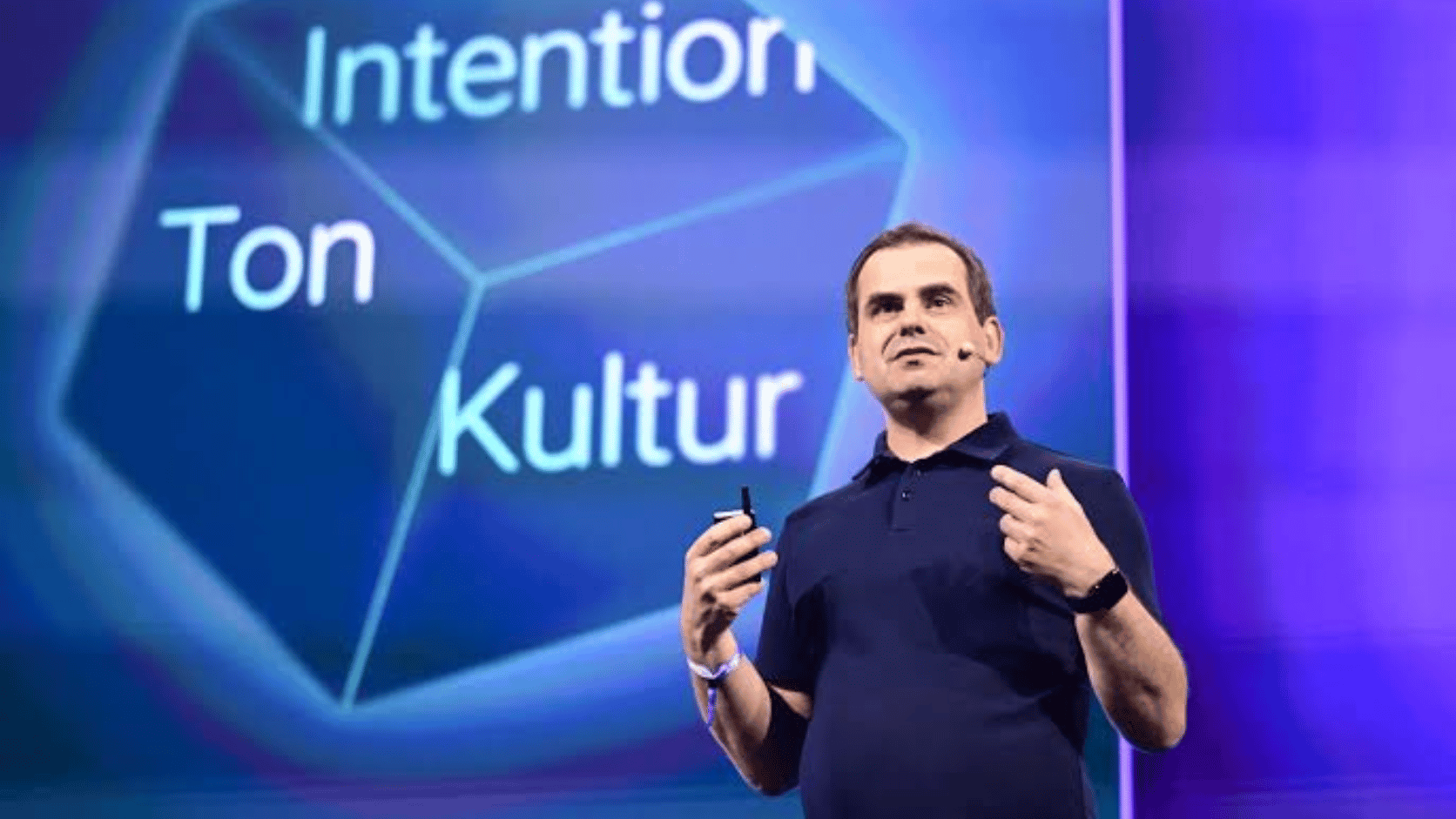
Image credit: DeepL newsroom. Jarek Kutylowski, founder of DeepL.

Leave a comment
Your email address will not be published. Required fields are marked *
Add a newsletter to your widget area.
Top Stories