
After Decades in Banking, Anne Boden Started Over and Built Starling
Anne Boden’s Starling Bank journey: how an industry insider built a mobile bank, from its 2014 founding to early products and operating milestones.
Many founders start outside an industry and try to change it. Anne Boden took a different route. After a long career inside financial services, she founded Starling Bank in 2014 with the intention of rebuilding the everyday banking experience around modern technology. The contrast is useful: her opportunity came from understanding an established system closely enough to imagine how it could work differently.
The UK company’s early history extends from formation to a banking licence, a mobile current account, and a business-account offering. It also includes the less visible work of building a regulated institution behind a convenient interface. This founder profile examines that development and the broader operating lessons it offers. It is a historical account of entrepreneurship, rather than an assessment of whether any particular banking product is suitable for a reader today.
An industry insider chooses to start again
Starling’s 2022 annual report records Boden’s earlier roles at Allied Irish Banks, RBS, and ABN AMRO. It describes her as a computer scientist by training and notes that she founded Starling in 2014. The background connected technical understanding with experience of banking operations, an unusually relevant combination for a digital-bank founder.
Experience can help an entrepreneur recognize which frustrations are structural and which are merely inconvenient. It can also reveal why changing them is difficult. Existing institutions have systems, obligations, and dependencies that cannot be replaced casually. Starting a new organization offers a different set of choices, but it does not remove the underlying responsibilities. Boden’s story is therefore about applying industry knowledge through a new institution, rather than assuming technology makes the institution unnecessary.
A banking licence was a foundational milestone
According to Starling’s newsroom history, the bank received its licence in July 2016 and launched its first mobile personal current account in May 2017. The sequence matters. A banking app is a visible product, but the ability to provide regulated banking services depends on more than the appearance and performance of its screens.
For founders in regulated industries, this distinction changes planning. Product development and institutional readiness need to progress together. A promising interface cannot substitute for the permissions, controls, capital, and operational arrangements required to provide the service. The relevant milestones may therefore look different from those of an ordinary consumer app. A responsible founder story should recognize that work, even when it is less dramatic to describe than a launch or a fundraising announcement.
Rebuilding around the way customers live
Starling’s 2016 launch-era announcement described a product and technology stack built from the ground up, with banking designed for people comfortable managing their lives through a phone. The aim reflected a change in customer expectations: information and routine actions should be accessible without requiring a visit to a physical location or a separate administrative process.
The product lesson extends beyond financial services. A new distribution channel can change what users consider normal. People accustomed to immediate updates elsewhere may find delayed information increasingly frustrating. The founder’s task is to identify which expectations can be met responsibly in the chosen industry. Convenience creates value when the surrounding operations support it. A fast-looking interface that cannot resolve a real customer problem will eventually expose the gap between presentation and service.
The application is only the visible layer
Banking involves records, payments, customer support, identity checks, and many processes a customer hopes never to think about. A well-designed app can make access simpler, but it does not make those processes optional. The company must maintain the relationship between what the screen tells a person and what the underlying institution is actually doing.
For entrepreneurs, this is a powerful example of how product simplicity depends on operational complexity being handled well. The customer should not need to understand every internal system to complete an ordinary task. At the same time, the organization needs clear accountability for the systems behind that task. Building a dependable service means paying attention to exceptions, failures, and recovery, rather than treating the normal transaction as the only experience worth designing.
Starting with daily financial life
In her July 2022 letter, Boden described Starling’s early approach as beginning with customers’ everyday financial needs. She contrasted it with starting primarily from decisions about which assets a bank wanted to hold. Her explanation linked a useful daily service with earning deposits and developing a lending strategy over time.
That is a founder account of the company’s strategic intent, not a universal formula for building a bank. Its broader relevance is the order in which an organization defines the problem. Starting with the customer’s recurring task can guide product priorities differently from starting with an internal revenue target. Both customer value and business economics still need to work. The value of the approach lies in making their relationship explicit rather than assuming one will automatically follow the other.
Business accounts widened the customer problem
Starling launched its digital business account in March 2018, according to its newsroom. A small-business customer brings requirements that overlap with personal banking but are not identical. Business owners may need to coordinate payments, maintain records, and connect financial information with other operational work. The product has to fit the way a business is run, not simply offer a differently labeled personal account.
For founders expanding into an adjacent segment, the lesson is to investigate the additional job. Similar technology may support both customers, but the value proposition and support needs can change. An entrepreneur using a financial service has obligations to employees, suppliers, and customers of their own. That makes clarity and dependable processes especially important. A product team should understand those downstream responsibilities before assuming that adoption in one segment proves readiness for another.
The importance of an economic model
In the same 2022 letter, Starling reported its first full year of profitability, including a £32.1 million pre-tax profit for the year ending 31 March 2022. That is a dated financial milestone, not a statement about the bank’s current results. It belongs in the story because digital distribution does not remove the need for a viable operating model.
Founders in any industry should distinguish between a popular experience and a sustainable business. Customer acquisition, support, infrastructure, and risk all require resources. The appropriate measures vary by sector, but the underlying question remains: can the organization continue providing the promised service under realistic conditions? A funding round or a growing account total supplies only part of the evidence. Financial performance needs to be read with its reporting period and context intact.
Trust has to survive ordinary exceptions
Customers often judge a financial service most sharply when something goes wrong. An unfamiliar transaction, a delayed payment, or an access problem can turn a routine interaction into an urgent concern. The experience then depends on explanation, support, and a credible path to resolution. These are product requirements even if they sit outside the most frequently used screens.
This is a useful challenge for founders designing services around convenience. Map the exceptions as carefully as the ideal path. Ask how a person will know what happened, what information they need, and who can help. A clean interface creates an expectation of competence. The organization must be able to support that expectation when the process becomes complicated. Trust develops through consistency between the simple promise and the response to a difficult moment.
A founder’s role changes as the institution grows
Starling’s author biography now identifies Boden as founder and former chief executive. The distinction matters in a historical profile. Founding a company and holding a current executive position are different facts, and readers should not be left to infer that an old title still applies. Her founder story remains relevant without presenting the organization’s later leadership as unchanged.
More broadly, growth changes what a company needs from its leaders and governance. An early founder may be closely involved in almost every important decision. A larger institution needs responsibilities that can be understood and carried by many people. The transition is part of building something durable. Entrepreneurial energy helps create a new organization; institutional clarity helps it continue functioning beyond the intensity of its first chapters.
Lessons for founders challenging established industries
Boden’s journey shows the potential value of deep industry familiarity. Knowing the existing system can help a founder identify a meaningful opening and understand the work required to pursue it. The challenge is to use that experience without simply recreating familiar practices inside a newer interface. A different customer experience needs corresponding choices in technology, operations, and organization.
The enduring lesson is to consider the whole service. A phone-based product may be how the customer encounters the company, but the promise depends on everything behind it. Starling’s founding history makes that relationship visible: industry knowledge informed the idea, authorization enabled the service, and product development shaped how people used it. For entrepreneurs, innovation becomes more credible when a better interface is supported by an institution capable of doing the underlying work responsibly and consistently.
There is also a lesson about how to describe innovation. A company does not need to invent the underlying need to improve the way it is served. People already needed to receive money, understand their balances, and make payments. The entrepreneurial opportunity involved changing the experience and the systems supporting it. That makes the quality of execution especially important. Customers can compare the new approach with something they already know, and their expectations will become more demanding as they rely on it. The founder must keep learning from that comparison rather than assume the original launch permanently establishes the advantage.
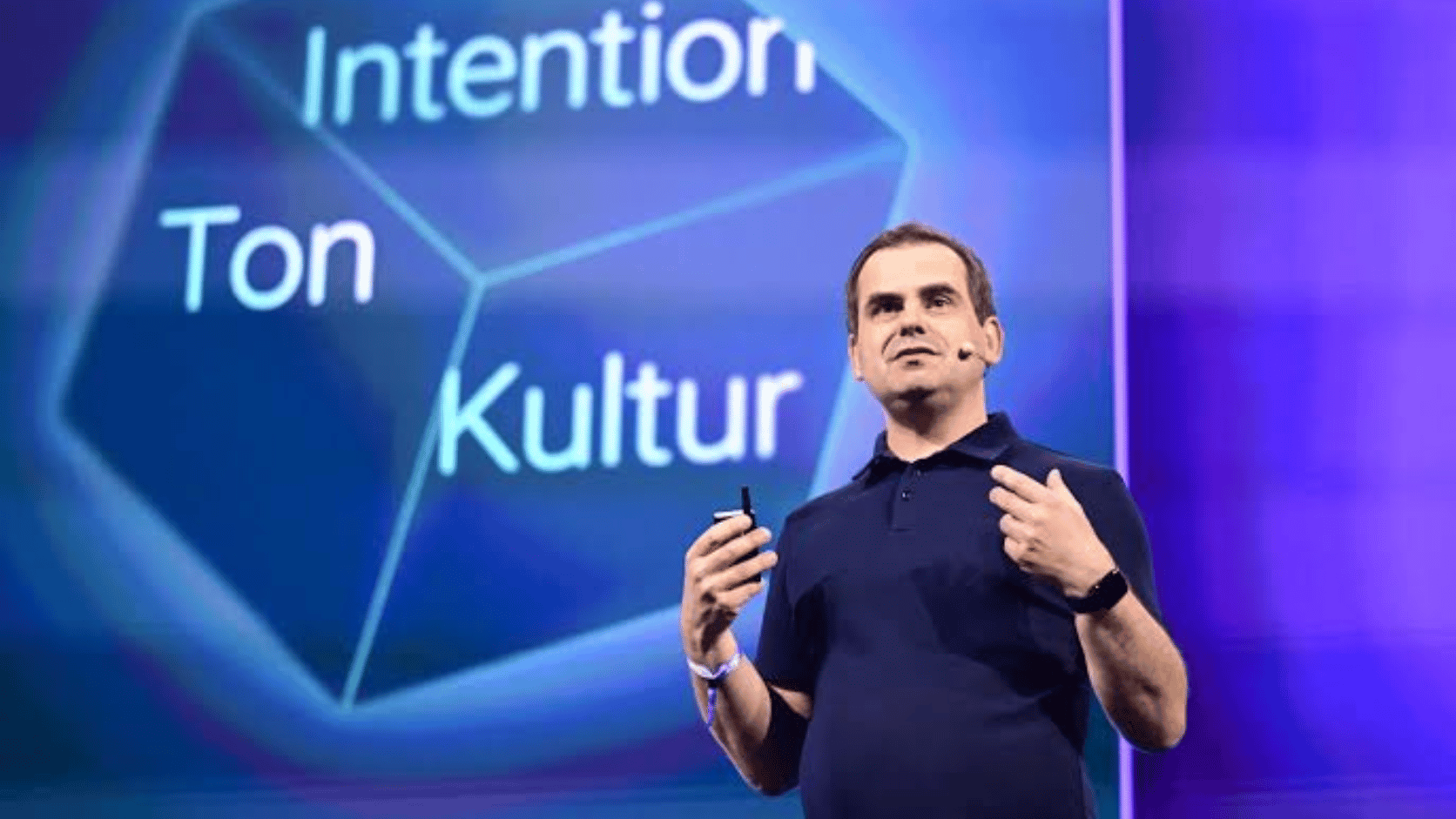
Image credit: Starling Bank. Anne Boden, founder and former CEO of Starling Bank.

Leave a comment
Your email address will not be published. Required fields are marked *
Add a newsletter to your widget area.
Top Stories