
The Rise of “Boring Businesses”: Why Solving Unexciting Problems Could Be India’s Next Startup Opportunity
Not every successful startup needs to be flashy. Explore why businesses solving everyday problems in logistics, waste, agriculture, infrastructure and other overlooked sectors could become India’s next big startup opportunities.
The Startup World Has a Visibility Problem
When people talk about startups, the conversation often revolves around businesses that are easy to notice. Consumer apps, artificial intelligence platforms, quick-commerce companies, fintech products and social media-driven brands frequently dominate headlines. Their products are visible, their growth can be measured quickly, and their stories are easy to share.
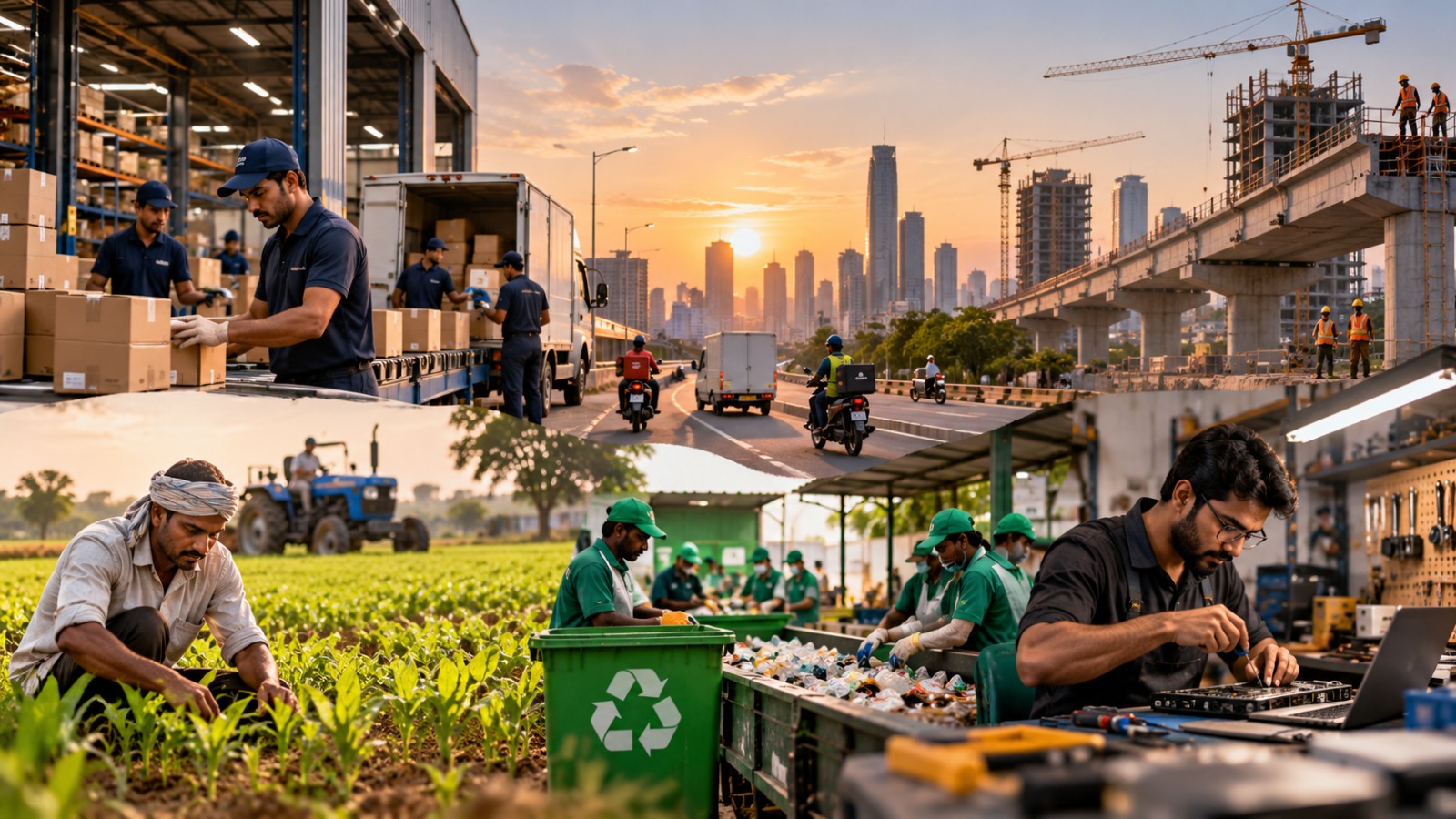
But behind this highly visible startup economy is another group of businesses solving problems that rarely become headline stories. They manage supply chains, repair equipment, handle waste, improve farm operations, support factories, maintain infrastructure, simplify documentation and help other businesses operate more efficiently. These companies may not always have the most exciting products, but their customers often depend on them every day.
This is where the idea of “boring businesses” becomes interesting. The word boring does not mean unimportant. In many cases, it means the opposite. These are businesses built around problems that are repetitive, necessary and sometimes difficult to solve. As India’s economy becomes more complex, solving these less glamorous problems could create some of the country’s most durable business opportunities.
What Exactly Is a “Boring Business”?
A boring business is generally one that solves a practical problem rather than trying to create a trend. It may not have a product that consumers talk about on social media, but it provides something that people or companies genuinely need.
Consider a company that helps small manufacturers track inventory, a service that repairs and refurbishes electronic equipment, a platform that helps farmers connect with buyers, or a business that manages recyclable material for factories. None of these ideas may sound revolutionary at first. Yet each addresses a real operational problem.
The strength of such businesses often comes from necessity. A customer may choose not to download another entertainment application, but a manufacturer cannot simply ignore inventory problems. A restaurant cannot ignore food waste. A logistics company cannot ignore inefficient routes. A factory cannot ignore equipment failures. A business that consistently solves these problems can become deeply embedded in its customer's operations.
India Has Plenty of Problems Waiting to Be Solved
India's scale creates an unusual startup opportunity: millions of small inefficiencies exist across industries and locations. The country has a large manufacturing base, a massive agricultural sector, expanding cities, complex supply chains and millions of small and medium-sized businesses.
That means opportunities are not limited to creating the next consumer application. They can also come from making existing systems work better.
The Indianstartup ecosystemnow covers a wide range of sectors, including agriculture, construction, healthcare, logistics, professional services, technology hardware, waste management, renewable energy and many others. This diversity shows that India's startup story is much broader than the technology categories that receive the most attention.
The opportunity is particularly interesting because many of these industries still contain processes that are manual, fragmented or inefficient. A founder who understands one of these processes deeply may discover a business opportunity simply by asking a basic question: “Why is this still being done this way?”
The Opportunity in Logistics and Supply Chains
Logistics is a good example of an industry where an apparently ordinary problem can become a significant business opportunity. Moving a product from one location to another involves transportation, warehousing, inventory, documentation, routing, tracking and coordination between multiple parties.
Even a small improvement in one of these areas can save businesses time and money.
This creates opportunities for startups that do not necessarily own fleets of vehicles or build massive warehouses. Instead, they can provide software, coordination tools, data systems or specialised services that make existing infrastructure more efficient.
As India's manufacturing and e-commerce ecosystems expand, these seemingly small improvements can have a large cumulative impact. The growth of logistics businesses demonstrates how technology can be applied to physical industries without completely replacing the systems already in place.
Turning Waste Into an Industry
Waste is another problem that is easy to overlook until it becomes impossible to ignore.
Every city, business, factory and household produces waste, but the process of collecting, sorting, processing and reusing it remains a complex challenge. This has created opportunities around recycling, e-waste, construction waste, organic waste and circular-economy models.
The interesting part is that waste management does not need to become a glamorous industry to become a valuable one. Businesses can create value by identifying materials that would otherwise be discarded and finding ways to collect, process, reuse or resell them.
The bigger opportunity may come from treating waste not simply as something that needs to disappear, but as a resource that can enter another supply chain.
For example, discarded electronics can contain valuable materials, packaging can potentially be recycled, organic waste can be converted into useful products, and industrial by-products can sometimes become inputs for another business.
What looks like waste from one perspective can become raw material from another.
Agriculture Is More Than Farming
Agriculture is another sector where the most interesting startup opportunities may not always involve creating a new consumer product.
Farmers deal with challenges involving access to equipment, market connections, storage, transportation, weather uncertainty, inputs and post-harvest losses. Businesses that solve even one part of this chain can create significant value.
Agritech startups are therefore increasingly looking beyond simply providing information to farmers. Opportunities can exist in farm equipment, supply chains, market access, processing, financing, storage and other services.
The important lesson is that innovation does not always mean inventing something completely new. Sometimes it means taking a process that has existed for decades and making it faster, cheaper, more reliable or easier to access.
A startup does not necessarily need to change farming itself. It can change what happens before the crop reaches the farm, after it leaves the farm, or in the many steps between production and the final customer.
The Manufacturing Opportunity
India's growing focus on manufacturing also creates room for businesses that operate behind the scenes.
Large manufacturers need thousands of supporting services. They require maintenance, components, quality control, industrial software, specialised equipment, waste management, energy management and reliable suppliers.
A startup does not necessarily have to manufacture the final product to benefit from this growth. It can become the company that makes manufacturing more efficient.
This is one reason the next generation of Indian startups could increasingly emerge from what can be called the “real economy” — businesses connected directly to manufacturing, infrastructure, healthcare, logistics, agriculture and other physical industries.
For example, a company that helps factories reduce machine downtime may not attract the same attention as a consumer application, but saving a factory several hours of production can have a direct financial impact.
In industries where downtime is expensive, a relatively simple solution can become extremely valuable.
Why These Businesses Can Be Difficult to Build
The idea of a boring business sounds simple until someone actually tries to build one.
Unlike a digital product that can potentially reach millions of users through an app store, many real-world businesses require relationships, physical infrastructure, trained workers and an understanding of local conditions.
A logistics startup may have to work with drivers, warehouses and businesses. A recycling company needs collection networks and processing partners. An agricultural startup may need to understand seasonal cycles and local markets. An industrial technology company may need to work directly with factories before customers are willing to adopt its solution.
This can make these companies slower to build. But that difficulty can also become a competitive advantage.
When a startup solves a complicated operational problem and builds trust with its customers, competitors may find it difficult to replicate the entire system overnight.
A business that has spent years developing supplier relationships, operational knowledge and customer trust has something that cannot always be copied simply by launching another application.
Profitability Can Matter More Than Popularity
One of the biggest differences between a “boring” business and a trend-driven startup is the way success is measured.
A business does not need to become famous to be valuable. It needs customers who are willing to pay for its solution and continue using it.
For example, a company that saves a manufacturer money every month may have a strong reason for that customer to continue using its service. A business that provides reliable maintenance may become part of a customer's regular operations. A logistics company that consistently improves delivery efficiency can become difficult to replace.
This creates a different path to growth. Instead of depending entirely on viral marketing or constant consumer acquisition, some businesses can grow through repeat customers, long-term contracts and strong relationships.
The model is particularly relevant as founders and investors pay greater attention to sustainable business economics. The opportunity is not necessarily to build the most talked-about startup. It is to build one that customers cannot easily live without.
Technology Can Make Boring Businesses More Interesting
Calling these businesses “boring” does not mean they are technologically outdated.
Artificial intelligence, Internet of Things devices, automation, data analytics, cloud software and digital payments can all be used to modernise traditional industries.
A maintenance company can use sensors to identify equipment problems before a machine breaks down. A logistics business can use data to improve routing. A waste-management company can use digital systems to track collection and sorting. A farming business can combine technology with field-level knowledge to improve decision-making.
The technology itself may not be the business. Instead, technology becomes the tool that makes an existing business problem easier to solve.
That distinction could become increasingly important as India's startup ecosystem matures. Instead of asking, “Where can we use the latest technology?” founders can start with a more valuable question: “Which problem is expensive enough that someone will pay us to solve it?”
The Opportunity Beyond India's Biggest Cities
Another important part of this shift is geography.
India's startup ecosystem is no longer limited to a handful of major technology hubs. Startup activity has expanded across multiple cities and regions, while sectors such as agriculture, manufacturing, logistics and infrastructure naturally create opportunities outside traditional startup centres.
This matters because many real-world problems exist far away from India's biggest corporate offices.
A founder working close to farmers may understand an agricultural problem better than someone researching it from a metropolitan office. Someone working with small manufacturers may discover operational challenges that are invisible to a consumer-focused technology company. Local knowledge can therefore become an important competitive advantage.
For entrepreneurs, this means the next opportunity may not necessarily be found by looking at what is trending online. It may be found by looking at what people around them struggle with every day.
The Next Big Startup May Not Look Like a Startup
India's next generation of successful businesses may therefore look very different from the stereotype of a startup.
It may operate from a warehouse instead of a fashionable office. Its customers may be factories rather than millions of app users. Its biggest achievement may be reducing delivery delays, improving equipment uptime, reducing waste or helping a small business manage its operations.
These businesses may never become household names, and that is not necessarily a weakness.
The strongest opportunities are often hidden inside problems that people have become accustomed to. When a process has been inefficient for years, people can stop questioning it. A founder who notices that inefficiency and builds a better alternative can turn an ordinary problem into an extraordinary business.
The next big startup opportunity could therefore be hiding in plain sight — inside a broken process, an inefficient supply chain, an overflowing warehouse, an expensive repair, an unnecessary delay or a task that everyone accepts as “the way things are done.”
Why Founders Should Start Looking at Problems, Not Trends
The startup ecosystem will continue to produce exciting technologies and consumer products, and there is nothing wrong with building them. But entrepreneurs should not assume that innovation has to be flashy.
India's growth will require better logistics, stronger manufacturing, more efficient agriculture, improved waste management, reliable infrastructure and better services for businesses of every size. Each of these areas contains thousands of smaller problems.
For an aspiring founder, that can be encouraging. You do not necessarily need to invent a technology that has never existed before. You need to understand a problem better than others and create a solution that works.
The next big startup may not begin with a revolutionary idea written on a whiteboard. It may begin with a founder noticing that a shop owner is losing money because of poor inventory management, a factory is losing production hours because of machine failures, a farmer is struggling to find a reliable buyer, or a business is spending too much time on a repetitive task.
Those problems may not sound exciting. But if enough people face the same problem, they can represent a significant business opportunity.
In the end, “boring” may be the wrong word. These businesses are not boring when you look at what they accomplish. They are practical, necessary and often difficult to replace. And as India's economy moves into its next phase of growth, solving these everyday problems could become one of the country's most important forms of innovation.
Visit Startup Timesfor more insights, stories and perspectives from India's evolving startup and business ecosystem.
Leave a comment
Your email address will not be published. Required fields are marked *
Add a newsletter to your widget area.
Top Stories