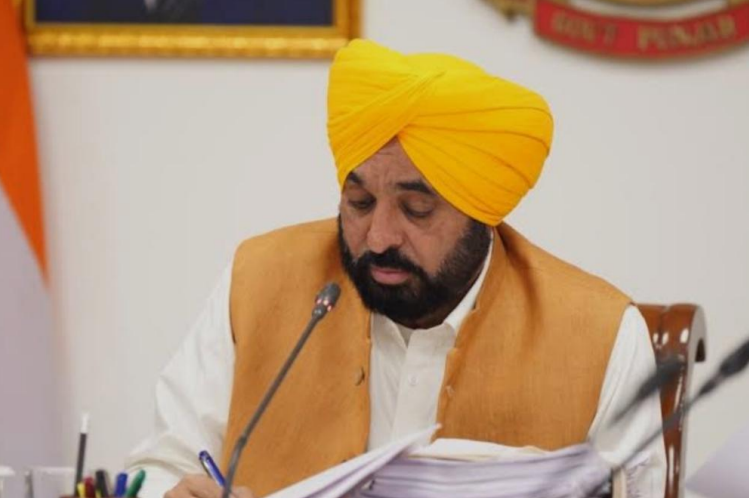
The Punjab government unveiled a significant welfare initiative in its 2026–27 state budget, announcing a monthly financial assistance scheme aimed at supporting women across the state. The programme, which offers ₹1,000 per month to eligible women and ₹1,500 to women belonging to Scheduled Caste communities, forms one of the centrepieces of the budget presented by Punjab Finance Minister Harpal Singh Cheema in the state assembly. The government said the initiative is designed to strengthen financial security for women, improve household stability and encourage greater economic participation among women in both rural and urban areas.
According to the budget documents, the scheme could potentially benefit up to 97 percent of women in Punjab, making it one of the largest gender-focused welfare programmes in the state’s history. The Punjab government has earmarked approximately ₹9,300 crore for the scheme, reflecting the administration’s broader strategy to expand social welfare coverage while addressing economic challenges faced by families amid rising living costs. Officials stated that the programme would be implemented through a structured eligibility verification process and direct bank transfers to beneficiaries.
Welfare Scheme at the Core of Punjab’s Budget Strategy
The women’s financial assistance programme was presented as a key social welfare measure in the state’s fiscal roadmap for the coming year. Finance Minister Harpal Singh Cheema, while presenting the budget in the Punjab Vidhan Sabha, said the government aims to provide economic relief to women who often shoulder significant financial responsibilities within households. He emphasised that the initiative seeks to improve financial independence among women while supporting families affected by inflation and economic uncertainty.
The scheme reflects a broader political commitment by the Aam Aadmi Party (AAP) government led by Chief Minister Bhagwant Mann, which had earlier pledged to introduce direct financial assistance for women as part of its social welfare agenda. Government officials stated that the programme is expected to significantly expand social protection mechanisms for women across the state, particularly in rural areas where household incomes are often unstable.
Policy analysts have noted that the programme mirrors similar welfare initiatives introduced in other Indian states in recent years, aimed at strengthening income support mechanisms for women. However, the scale of the Punjab programme with coverage potentially extending to nearly the entire adult female population makes it one of the most extensive such schemes implemented at the state level.
Financial Allocation and Budgetary Implications
The Punjab Women Aid government has allocated around ₹9,300 crore to fund the scheme in the upcoming fiscal year, making it one of the largest single welfare allocations in the state budget. Officials explained that the allocation has been structured to ensure sustainability while allowing the programme to reach a large number of beneficiaries. The funds will be distributed through Direct Benefit Transfer (DBT) mechanisms to ensure transparency and efficiency in payments.
Economists note that while the scheme will require significant fiscal resources, the government has argued that the programme will stimulate local economic activity by increasing household spending power. Increased disposable income among women beneficiaries could translate into higher consumption in local markets, benefiting small businesses and rural economies.
At the same time, fiscal experts have pointed out that Punjab Women Aid already faces considerable financial pressures due to debt obligations and rising expenditure on welfare programmes. Analysts therefore suggest that careful fiscal management will be necessary to sustain the scheme without widening the state’s budget deficit. The government has maintained that the programme has been designed within the framework of responsible fiscal planning.
Social and Economic Impact on Women
Supporters of the scheme argue that direct financial transfers to women can have far-reaching social and economic benefits. By placing funds directly into women’s bank accounts, the programme aims to strengthen their financial autonomy and decision-making power within households. Studies in several regions have shown that such initiatives often lead to improved spending on health, education and household welfare.
Women’s rights advocates have welcomed the announcement, stating that income support programmes can play a crucial role in addressing gender-based economic disparities. In Punjab Women Aid, where a large number of women remain outside formal employment, direct financial assistance could provide an important safety net and encourage greater participation in local economic activities.
Government officials also highlighted that the ₹1,500 monthly support for Scheduled Caste women aims to address structural inequalities faced by historically disadvantaged communities. By providing higher financial assistance to these groups, policymakers hope to promote more inclusive development and reduce economic disparities within the state.
Implementation and Eligibility Framework
The Punjab Women Aid government has indicated that the scheme will be implemented through a structured eligibility process to ensure that assistance reaches the intended beneficiaries. Authorities are expected to use existing administrative databases and welfare records to identify eligible women while coordinating with local administrative bodies for verification.
Officials have also emphasised the role of digital infrastructure in implementing the programme. Payments will be made through direct bank transfers linked to Aadhaar and verified bank accounts, reducing the risk of leakages and ensuring timely delivery of funds. State authorities have begun working on developing an operational framework that will guide the enrolment and disbursement process.
Administrative departments are expected to conduct awareness campaigns to ensure that eligible beneficiaries are informed about the programme and can register for it effectively. The government has also indicated that monitoring mechanisms will be established to evaluate the scheme’s impact and ensure transparency in its execution.
Outlook
The introduction of the women’s monthly assistance programme represents a major policy initiative within Punjab’s 2026–27 budget and underscores the state government’s emphasis on social welfare and gender-focused economic support. If implemented effectively, the programme could significantly improve financial security for millions of women while contributing to broader household stability and local economic activity.
However, the long-term success of the scheme will depend on careful fiscal management and efficient implementation mechanisms. As the programme rolls out across the state, policymakers and analysts will closely monitor its economic impact, administrative efficiency and sustainability within Punjab Women Aid broader fiscal framework. If the initiative achieves its intended outcomes, it may also serve as a model for similar gender-focused welfare programmes in other parts of India.