
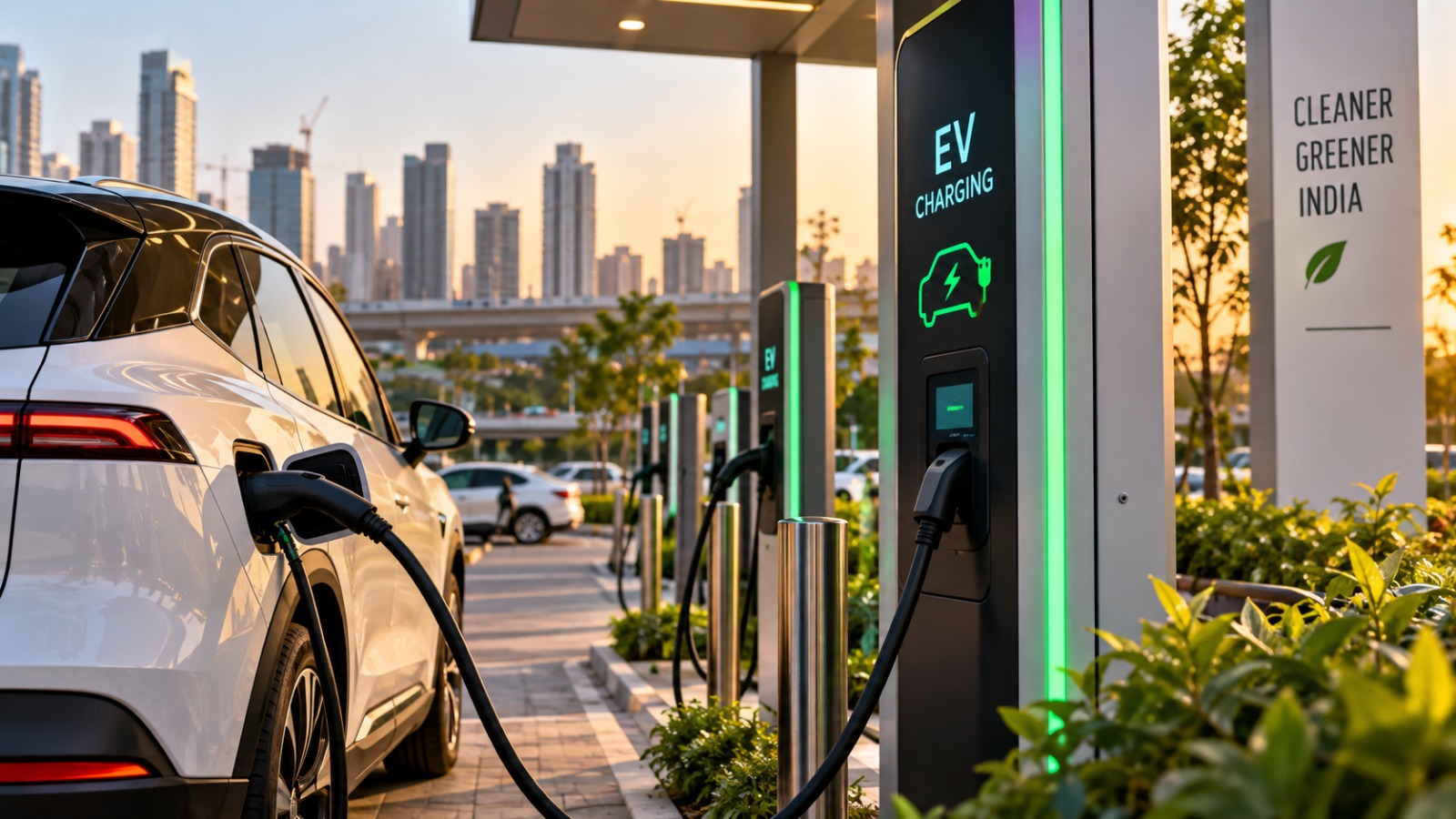
India’s EV Charging Infrastructure: The Next Big Opportunity for Businesses
India’s growing electric vehicle market is creating new opportunities in EV charging infrastructure, from charging stations and battery swapping to software and fleet solutions.
India’s electric vehicle market is entering a phase where the conversation is moving beyond vehicle sales and toward the infrastructure needed to support them. As more consumers, businesses, and fleet operators adopt electric mobility, the availability of convenient and reliable charging is becoming an increasingly important part of the ecosystem. In 2025, India’s annual EV sales reached a record 2.3 million units, while electric car sales increased by more than 75% year-on-year. This growing vehicle base is creating a parallel demand for charging infrastructure across cities, highways, workplaces, and commercial locations.
A Growing Need for Charging Infrastructure
An electric vehicle is only as useful as the charging network that supports it. For consumers considering an EV, concerns around charging availability, charging time, and the ability to find a station during long-distance travel can influence purchasing decisions. This makes charging infrastructure more than just a supporting service; it is becoming an essential component of the electric mobility ecosystem.
India’s public charging network has been expanding rapidly. The country now has tens of thousands of public charging points across different locations, with the network continuing to grow as EV adoption increases. The expansion is taking place across cities, highways, commercial areas, workplaces, and residential communities.
As more electric vehicles enter the market, the need for accessible charging points is expected to increase. This creates an opportunity for businesses to become part of the infrastructure supporting India's transition toward electric mobility.
Why Charging Can Become a Business Opportunity
The expansion of EV charging creates opportunities for businesses beyond simply operating charging stations. Companies can participate in different parts of the ecosystem, including charging hardware, station management software, payment platforms, fleet charging, maintenance, battery swapping, and energy management.
For existing businesses, adding charging facilities can also become an additional service. Shopping malls, hotels, restaurants, office buildings, residential complexes, parking operators, and highway businesses can potentially use charging facilities to attract and retain customers who own electric vehicles. In this model, charging becomes part of a broader customer experience rather than an independent business.
For startups, the opportunity is even wider. Businesses can develop software that helps drivers locate available chargers, make payments, reserve charging slots, or monitor charging sessions. Others can focus on managing charging networks for commercial fleets, where vehicles may need predictable charging schedules and higher utilisation of charging infrastructure.
The Role of Government Support
Government policy is also playing an important role in building India's charging ecosystem. Under the PM E-DRIVE scheme, the government has allocated significant funding toward the deployment of electric vehicle public charging stations across the country. The scheme is intended to support the development of charging infrastructure as India works toward building a wider EV ecosystem.
The government has also made it easier for private businesses to participate. Setting up EV charging stations is an unlicensed activity, allowing private entrepreneurs to establish charging infrastructure without requiring a specific electricity distribution licence for the activity. Guidelines issued by the Ministry of Power are intended to support a connected and interoperable charging network.
This creates an interesting environment for entrepreneurs because the development of charging infrastructure does not depend entirely on large automobile manufacturers or government-owned organisations. Private businesses can participate by identifying locations where EV users need convenient charging and developing services around that demand.
Location Could Be One of the Biggest Factors
The success of an EV charging station can depend heavily on where it is located. A charger in an area with very few EV users may struggle to achieve sufficient utilisation, while a strategically located station near offices, residential communities, shopping centres, highways, or fleet hubs may see significantly greater demand.
Urban charging is particularly important because many EV owners live in apartments or areas where installing private chargers may not always be straightforward. Public and semi-public charging facilities at workplaces, shopping centres, and parking areas can therefore become an important part of the charging ecosystem.
Highway charging presents another opportunity. Long-distance EV travel requires reliable charging points at appropriate intervals, making highways, fuel stations, restaurants, and roadside commercial properties potential locations for charging infrastructure. As EV adoption grows, businesses located along major travel routes may increasingly consider charging as an additional service for customers.
Beyond Cars: Two-Wheelers, Three-Wheelers, and Fleets
India's EV opportunity is not limited to electric cars. Two-wheelers and three-wheelers represent an important part of the country's electric mobility market. Electric two-wheelers are increasingly being used for personal transportation and delivery services, while electric three-wheelers have become particularly important for urban mobility and commercial transportation.
This creates different charging requirements from those of private electric cars. Delivery companies, ride-hailing operators, logistics businesses, and commercial three-wheeler operators may require charging solutions designed around frequent daily usage. Instead of waiting for individual customers to arrive, charging businesses can potentially build recurring relationships with fleet operators that need dependable access to energy.
Fleet charging could therefore become an important segment of the market. A delivery company with dozens or hundreds of electric vehicles, for example, may need dedicated charging infrastructure, software to monitor usage, and systems that help schedule charging efficiently.
The Challenges Businesses Need to Consider
Despite the opportunity, building a profitable charging network is not simply a matter of installing chargers. Businesses need to consider land and rental costs, electricity connections, equipment costs, maintenance, software, customer acquisition, and station utilisation. A charging station may have significant upfront costs but generate limited revenue if it does not receive enough customers.
Charging speed is another consideration. Fast chargers can reduce waiting times, but they can also require more expensive equipment and appropriate electrical infrastructure. Businesses therefore need to understand the needs of the customers they are targeting before deciding what type of charging equipment to install.
Interoperability and reliability are equally important. EV users are more likely to depend on a charging network when they can easily locate chargers, understand pricing, make digital payments, and receive reliable information about whether a charger is available. A station that frequently experiences technical problems can quickly become a poor customer experience.
An Emerging Ecosystem, Not Just a Charging Station
The future of EV charging in India is likely to involve much more than standalone charging points. Charging stations can increasingly become connected digital businesses, combining hardware, software, payments, customer data, and energy management.
Businesses may also explore models where charging is integrated with existing infrastructure. A restaurant could attract EV drivers by offering charging while customers eat. A shopping centre could provide charging while customers shop. An office complex could offer workplace charging to employees. A fleet operator could build dedicated charging facilities around its daily routes.
This approach changes the way businesses look at charging infrastructure. Instead of asking only how much revenue a charger can generate directly, businesses can also consider how charging can increase customer visits, improve fleet efficiency, or create additional services.
What the Future Could Look Like
India's EV charging ecosystem is still developing, which means the market will continue to evolve as vehicle adoption, technology, regulations, and consumer behaviour change. Government programmes are supporting the expansion of charging infrastructure, while private businesses are exploring different models for deploying and operating chargers.
For entrepreneurs, the opportunity may therefore lie not only in building more charging stations but in solving the problems surrounding them. Better locations, easier payments, reliable chargers, fleet-management solutions, smarter energy use, and improved customer experiences could all become important parts of the next stage of India's EV infrastructure.
The growth of electric vehicles is creating a new layer of infrastructure across India's cities, highways, and commercial spaces. As the number of EVs on Indian roads increases, the demand for convenient and dependable charging is likely to grow alongside it. For businesses willing to invest in the infrastructure, technology, and services needed to support this transition, EV charging represents an emerging business segment within India's broader shift toward electric mobility.
For more insights on India’s startup ecosystem, emerging industries, business trends, and innovation, visit Startup Times and stay updated with the latest developments shaping the business world.


Leave a comment
Your email address will not be published. Required fields are marked *
Add a newsletter to your widget area.
Top Stories