India’s Aerospace Industry: Building a Global Manufacturing Hub
India’s aerospace industry is expanding across aircraft manufacturing, components, maintenance, defence and advanced engineering, creating new opportunities for businesses and investors.
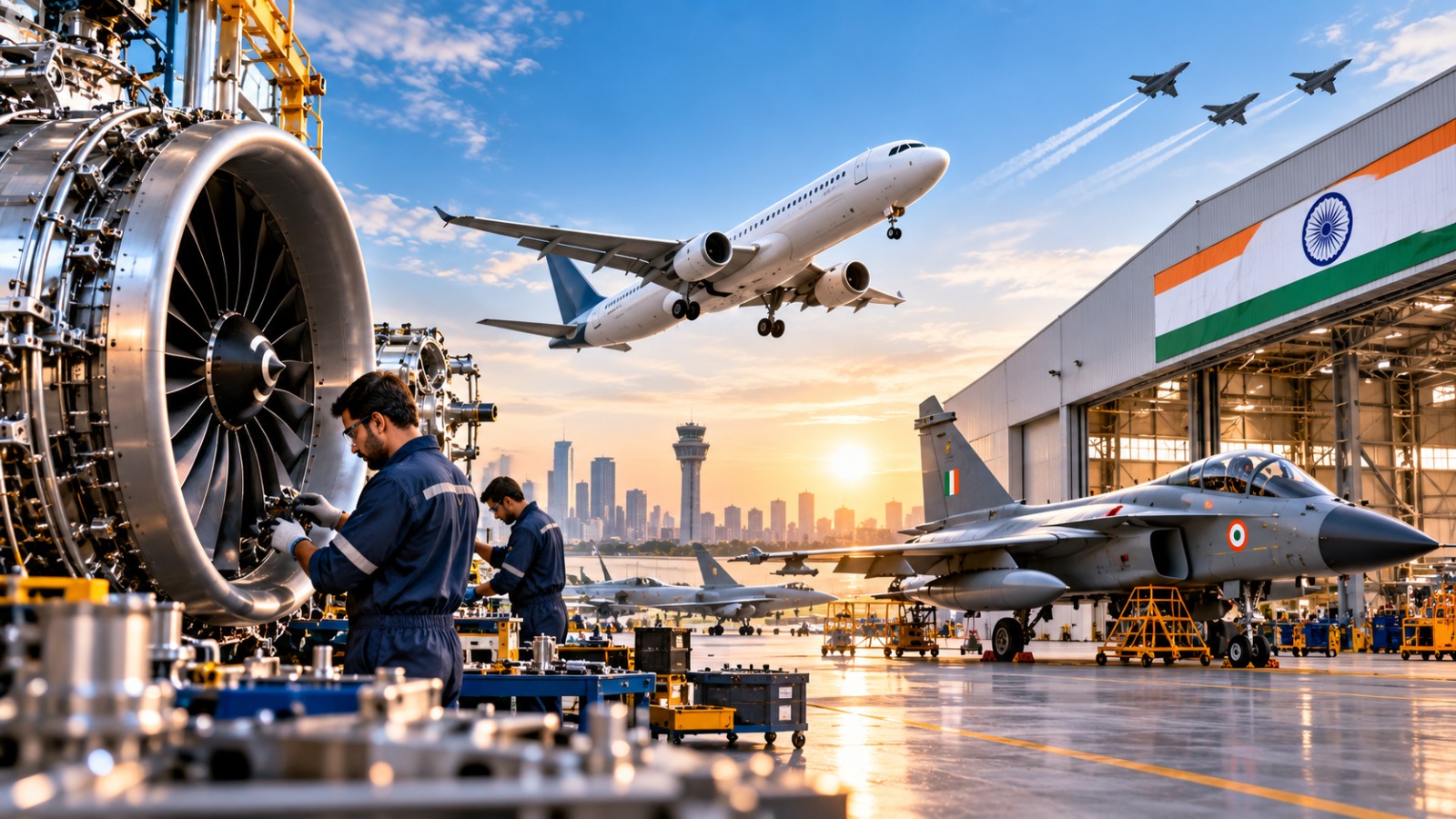
India’s aerospace industry is entering a new phase. For decades, India’s role in aviation was largely associated with operating airlines, developing airports and purchasing aircraft. Today, the opportunity is much broader. Aircraft manufacturing, component production, maintenance and repair, engineering services, defence aviation and advanced manufacturing are becoming important parts of India’s industrial ecosystem. The country is increasingly looking to move from being primarily a large aviation market to becoming a significant participant in the global aerospace supply chain.
The opportunity is being supported by the rapid expansion of India’s aviation market as well as growing demand for aircraft and related services. At the same time, government policy is placing greater emphasis on aircraft design, manufacturing and maintenance, repair and overhaul, commonly known as MRO. At Wings India 2026, the government highlighted the ambition of developing India as a comprehensive hub for aircraft design, manufacturing, financing and maintenance.
From Components to a Complete Aerospace Ecosystem
The aerospace industry is much larger than the final assembly of an aircraft. It includes a wide network of businesses involved in design and engineering, aircraft components, avionics, hydraulic systems, electrical systems, engines, landing gear, aircraft assembly and MRO services. India already has capabilities across several of these areas, particularly in engineering services and component manufacturing, while efforts are underway to expand into higher-value parts of the aerospace value chain.
Aircraft component manufacturing is one area where India has been attracting increasing attention. International aerospace companies are sourcing components and engineering services from Indian companies, while the government has been working on a national roadmap to strengthen domestic aircraft-component manufacturing. The objective is not simply to increase the number of components produced in India, but also to build an ecosystem involving design, manufacturing, certification, skills and technology.
This creates opportunities for a wide range of businesses. Large aerospace companies may handle complex systems and assemblies, while MSMEs can participate in specialised manufacturing, precision engineering, machining, casting, forging, electronics and other components. A stronger domestic supplier network can also make India more attractive to global aerospace companies looking to diversify their supply chains.
Defence Is Driving Aerospace Manufacturing
India’s defence sector is another major part of the aerospace opportunity. Fighter aircraft, helicopters, transport aircraft, engines, avionics and other aerospace systems require highly specialised manufacturing capabilities. Government efforts to increase domestic defence production are therefore closely connected with the development of India's aerospace ecosystem.
India’s defence production reached a record ₹1.78 lakh crore in FY2025–26, with the private sector accounting for 24% of production. Defence exports also reached ₹38,424 crore during the same financial year. The government has set targets of ₹3 lakh crore in annual defence production and ₹50,000 crore in defence exports by 2029.
The growth of defence manufacturing can have an impact beyond large aircraft manufacturers. Aerospace requires thousands of specialised components and technologies, creating opportunities for smaller manufacturers and technology companies to enter the supply chain. Recent developments have also included projects focused on aerospace integration and flight testing, alongside efforts to expand private-sector participation in defence manufacturing.
The Growing MRO Opportunity
While manufacturing receives much of the attention, Maintenance, Repair and Overhaul could become another important pillar of India's aerospace industry. Every aircraft requires regular inspections, repairs, component maintenance and engine servicing throughout its operating life. As India's aircraft fleet expands, the demand for these services is expected to grow.
India has been introducing policy changes to make its MRO sector more competitive. These include a uniform 5% IGST on imported aircraft parts, components, tools and testing equipment, along with other measures aimed at improving the operating environment for MRO businesses. The number of MRO facilities in India increased from 96 in 2014 to 166 in 2025.
Recent investments are also bringing advanced capabilities into the country. A Safran LEAP engine MRO facility was inaugurated in Hyderabad, while Thales established an avionics MRO facility in India. Such facilities can reduce the need to send aircraft components and engines overseas for certain maintenance activities while creating demand for highly skilled technical professionals.
Opportunities for Indian Businesses
The aerospace industry creates opportunities far beyond aircraft manufacturers themselves. Companies producing precision-engineered parts, aerospace-grade materials, electronics, software, sensors, testing equipment and specialised machinery can become part of the wider supply chain. Engineering and technology companies can also contribute through aircraft design, simulation, testing and digital solutions.
This ecosystem could be particularly significant for Indian MSMEs and startups. Aerospace products require extremely high standards of quality, reliability and traceability, which means companies entering the sector need to build specialised capabilities. However, becoming an aerospace supplier can also provide businesses with opportunities to participate in long-term global supply chains rather than relying solely on domestic demand.
The government has also been opening more space for startups, industry and academia to participate in defence research and innovation. In 2026–27, ₹29,100 crore was allocated for defence R&D, with 25% of the R&D budget accessible to industry, startups and academia. Initiatives such as iDEX are also being used to encourage development of technologies in areas including drones, robotics, artificial intelligence and advanced materials.
Building the Skills Behind the Industry
Aerospace manufacturing requires a specialised workforce. Engineers, aircraft maintenance professionals, technicians, machinists, software specialists, designers and quality-control professionals all play important roles in the industry. As manufacturing and MRO activities expand, the availability of skilled talent will become an important factor in determining how quickly India can scale its aerospace capabilities.
The government has already recognised the importance of aerospace-specific skills. India has 57 DGCA-approved Aircraft Maintenance Engineering training institutes, with the capacity to train around 3,700 aircraft maintenance engineers annually.
The expansion of aerospace manufacturing could therefore have an impact on education and employment as well. Universities, technical institutions and training centres can become important partners in developing the specialised skills required for the industry, while companies can create apprenticeship and industry-training programmes to prepare workers for advanced manufacturing environments.
The Technology Challenge
Building a globally competitive aerospace industry, however, is not an easy process. Aircraft are among the most technically demanding products manufactured anywhere in the world. Components must meet strict standards for safety, reliability, durability and performance, while companies need sophisticated testing and certification capabilities.
India has made progress in several areas, but gaps remain in some high-end technologies, including advanced engines, specialised materials and certain critical aerospace systems. Strengthening India's capabilities across the complete aerospace value chain will be important rather than concentrating only on lower-level component manufacturing.
Developing these capabilities requires long-term investment in research, testing infrastructure, intellectual property and skilled talent. It also requires collaboration between government organisations, established aerospace companies, startups, universities and global manufacturers.
India’s Place in the Global Aerospace Supply Chain
Global aerospace manufacturing is increasingly built around international supply chains, with aircraft and engine manufacturers depending on companies across multiple countries for specialised components and services. This creates an opportunity for India to become a larger supplier of aerospace parts, engineering services and MRO capabilities.
India’s geographic location, large domestic aviation market, engineering talent and expanding manufacturing base provide several advantages. The government has also been working to improve the business environment for aerospace manufacturing and MRO, while global companies are increasingly exploring partnerships and manufacturing opportunities in India.
The long-term opportunity is therefore not limited to producing aircraft for the Indian market. Indian companies could increasingly participate in international aerospace programmes by supplying components, engineering services, maintenance capabilities and specialised technologies to customers around the world.
What Lies Ahead?
India’s aerospace industry is still developing, but its direction is becoming increasingly clear. The country is building capabilities across aircraft components, defence aviation, MRO, engineering, manufacturing and aerospace technology. Government policies, private-sector investment and growing demand for aviation are creating conditions for the industry to expand further.
The next challenge will be moving higher up the value chain. Producing more components is important, but developing proprietary technologies, advanced materials, engines, avionics, testing capabilities and complete aerospace systems will determine how deeply India can participate in the global industry.
For businesses, the opportunity lies in becoming part of this expanding ecosystem. For startups, it could mean developing specialised technologies and components. For manufacturers, it could mean entering global supply chains. For skilled professionals, it could create opportunities across engineering, production, maintenance and research.
India’s aerospace story is therefore no longer only about how many aircraft the country operates. It is increasingly about how much of those aircraft India can design, manufacture, maintain and support. If the country can strengthen its technology capabilities while building a reliable supplier ecosystem and skilled workforce, aerospace could become an important pillar of India’s manufacturing ambitions and its participation in global high-technology industries.
For more insights into India’s emerging industries, business trends, startups and opportunities, visit Startup Times.

Leave a comment
Your email address will not be published. Required fields are marked *
Add a newsletter to your widget area.
Top Stories