
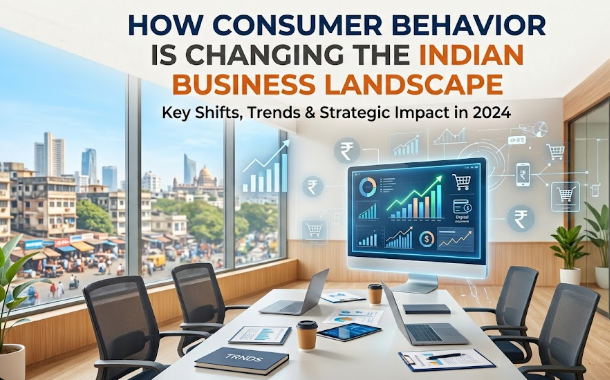
How Consumer Behavior Is Changing the Indian Business Landscape
Consumer behavior in India is rapidly evolving with digital adoption, social media, quick commerce, personalization, and changing customer expectations. Explore how these shifts are transforming business strategies, marketing, product development, and growth opportunities across India.
India's business landscape is changing rapidly, and one of the biggest forces behind this transformation is consumer behavior.
Indian consumers today have more choices, greater access to information, and higher expectations than ever before. The growth of smartphones, digital payments, e-commerce, social media, quick commerce, and online content has changed how people discover, compare, purchase, and review products.
The modern Indian consumer is not simply looking for a product at a reasonable price. Factors such as convenience, trust, personalization, reviews, brand values, customer experience, and speed can influence purchasing decisions.
For businesses, understanding these changes is becoming essential. Companies that closely observe changing consumer preferences can identify new opportunities, improve customer experiences, and develop products that better match market demand.
From large corporations to startups and D2C brands, consumer behavior in India is increasingly shaping business strategies, marketing decisions, product development, and customer engagement.
The Rise of the Digitally Connected Indian Consumer
One of the most significant changes in consumer behavior in India has been the shift toward digital platforms.
Smartphones and affordable internet access have made online research a normal part of the buying journey. Consumers can discover a brand on Instagram, watch a product review on YouTube, compare prices across platforms, read customer reviews, and complete a purchase through an e-commerce website or mobile application.
This means the customer journey is no longer limited to a physical store.
A consumer may interact with a brand through several touchpoints before making a purchase. These can include:
- Social media posts and advertisements
- Search engines
- Influencer recommendations
- Customer reviews
- Brand websites
- E-commerce marketplaces
- WhatsApp communication
- Online communities
Businesses therefore need to think beyond traditional advertising and create consistent experiences across multiple channels.
Convenience Has Become a Major Purchase Driver
Convenience is playing an increasingly important role in purchasing decisions.
Consumers are becoming accustomed to services that save time and reduce effort. Online grocery shopping, food delivery, digital payments, home services, and quick-commerce platforms have contributed to rising expectations around speed and accessibility.
This has created a new standard for businesses.
Customers may expect:
- Simple ordering processes
- Multiple payment options
- Fast delivery
- Easy returns
- Responsive customer support
- Real-time order updates
- Mobile-friendly experiences
For businesses, convenience is no longer only a feature of the product. It can become part of the overall customer experience.
Startups have particularly benefited from this shift by building business models around specific consumer pain points and offering simpler alternatives to traditional purchasing processes.
Personalization Is Changing Customer Expectations
Consumers are increasingly exposed to personalized recommendations online. Streaming platforms recommend content based on viewing behavior, e-commerce platforms suggest products based on browsing activity, and social media feeds are influenced by individual interests.
As a result, customers can increasingly expect brands to understand their needs.
Personalization in business can take many forms, including:
- Personalized product recommendations
- Customized email campaigns
- Relevant advertisements
- Loyalty rewards
- Personalized offers
- Tailored content
- Customized customer support
For Indian businesses, personalization can become particularly relevant as consumer preferences differ significantly across regions, languages, age groups, income levels, and cultural backgrounds.
Instead of treating the Indian market as a single homogeneous audience, companies are increasingly looking at smaller customer segments.
Social Media Is Influencing Buying Decisions
Social media has transformed how consumers discover brands.
Platforms such as Instagram, YouTube, Facebook, and other digital communities allow businesses to communicate directly with potential customers. At the same time, consumers can share their experiences publicly.
This creates both opportunities and challenges for brands.
A product can gain attention through a viral video, creator recommendation, customer review, or user-generated content. On the other hand, negative customer experiences can also spread quickly.
Influencer marketing has become another important part of this ecosystem. Consumers may discover a skincare product, fashion brand, food product, technology product, or service through a creator they already follow.
This has encouraged businesses to focus not only on traditional advertising but also on community building, creator partnerships, social proof, and authentic storytelling.
The Growth of D2C and Consumer-Centric Brands
Changing consumer behavior has also supported the growth of India's direct-to-consumer, or D2C, ecosystem.
D2C businesses can communicate directly with consumers through their own websites, social media channels, marketplaces, and digital communities. This direct relationship can help brands understand customer preferences and collect feedback.
Many emerging brands are building their identity around specific consumer needs rather than trying to serve everyone.
For example, brands may focus on:
- Sustainable products
- Regional foods
- Wellness
- Beauty and personal care
- Fitness
- Pet care
- Home products
- Specialized fashion categories
This shift demonstrates how consumer demand can create opportunities for businesses to develop highly focused products and positioning.
Consumers Are Becoming More Value-Conscious
While convenience and experience matter, price continues to be an important factor for many Indian consumers.
However, value-conscious behavior does not always mean choosing the cheapest product.
Consumers may compare the price of a product with its quality, durability, features, brand reputation, customer service, and reviews.
This has created an interesting environment for businesses. Brands need to demonstrate value for money, rather than simply competing on low prices.
Discounts can attract customers, but long-term loyalty may depend on whether customers believe that the product consistently delivers what the brand promises.
Trust and Reviews Are Becoming More Important
Before purchasing a product or service, many consumers now look for information from other customers.
Online reviews, ratings, testimonials, creator opinions, and user-generated content can influence perceptions of a brand.
This is particularly important for businesses that operate primarily online because customers may not have the opportunity to physically examine a product before purchasing it.
Businesses therefore need to pay attention to:
- Product quality
- Transparent communication
- Customer reviews
- Complaint resolution
- Return policies
- Data privacy
- Brand credibility
A strong digital presence is not only about visibility. It is also about creating confidence among potential customers.
Sustainability Is Entering Consumer Conversations
Environmental and social considerations are increasingly becoming part of discussions around consumption.
Some Indian consumers are showing greater interest in products associated with sustainable packaging, responsible sourcing, reduced waste, ethical production, and environmentally conscious practices.
However, consumer priorities vary by category and demographic group. Price, convenience, availability, and product performance can still be important considerations.
For businesses, this means sustainability claims need to be supported by credible actions rather than used only as marketing messages.
Brands that communicate sustainability should clearly explain what they are doing and avoid making vague or unsupported claims.
Regional Markets Are Becoming More Important
India's consumer market is highly diverse.
Consumer preferences can differ across states, cities, languages, cultures, and income groups. The growing use of regional-language content and digital platforms is making it easier for businesses to communicate with audiences beyond major metropolitan cities.
This is creating opportunities for companies to develop regional marketing strategies.
A campaign designed for consumers in Mumbai may not necessarily have the same impact in Jaipur, Guwahati, Lucknow, Kochi, or smaller Tier-2 and Tier-3 cities.
Businesses are therefore increasingly considering:
- Regional languages
- Local cultural preferences
- Regional influencers
- Local purchasing habits
- City-specific demand
- Regional festivals and occasions
Understanding local context can help businesses create more relevant communication.
Quick Commerce Is Changing Expectations Around Speed
The expansion of quick commerce has also influenced consumer expectations.
Consumers who become accustomed to receiving certain products quickly may begin to expect faster service from other businesses as well.
This creates pressure on companies to improve logistics, inventory management, fulfillment, and customer communication.
However, speed is not equally important for every category. For some products, consumers may prioritize quality, customization, price, or reliability over immediate delivery.
Businesses therefore need to understand what aspect of convenience matters most to their specific customers.
Digital Payments Are Simplifying Transactions
India's digital payment ecosystem has significantly changed everyday transactions.
Consumers can make payments through smartphones and digital platforms for everything from retail purchases to food delivery and online services.
For businesses, offering convenient payment options can reduce friction during checkout.
Digital transactions also contribute to the broader shift toward online-first customer journeys, where discovery, evaluation, payment, and post-purchase communication can happen through digital channels.
What These Changes Mean for Indian Businesses
Changing consumer behavior is influencing almost every part of business strategy.
1. Marketing Is Becoming More Data-Driven
Businesses can use customer behavior data to understand what content, products, and campaigns generate engagement and conversions.
This allows marketers to move beyond assumptions and make decisions based on measurable customer interactions.
2. Customer Experience Is Becoming a Competitive Factor
A strong product alone may not be enough. Website experience, delivery, communication, payment, support, and after-sales service can all influence customer satisfaction.
3. Product Development Is Becoming More Consumer-Led
Businesses can use customer feedback, reviews, surveys, search trends, and social conversations to identify gaps in the market.
4. Brands Need to Be More Transparent
Consumers can quickly research companies and compare alternatives. Clear pricing, authentic communication, and responsive customer service can therefore become important components of brand trust.
5. Startups Can Find Opportunities in Changing Habits
When consumer habits change, new problems and unmet needs can emerge. Startups that identify these gaps can build products and services around emerging demand.
How Businesses Can Adapt to Changing Consumer Behavior
Indian businesses can take several practical steps to stay aligned with evolving customer expectations.
Listen to customers: Regularly collect feedback through reviews, surveys, social media, and customer support interactions.
Study customer journeys: Understand where customers discover the brand, what information they need, and what causes them to abandon a purchase.
Use data responsibly: Customer data can provide useful insights, but businesses should prioritize privacy, security, and responsible data practices.
Build an omnichannel presence: Customers should be able to interact with the brand consistently across websites, social media, marketplaces, and offline channels.
Invest in content: Educational videos, blogs, guides, reviews, and user-generated content can help customers make informed decisions.
Focus on retention: Acquiring customers is only one part of growth. Businesses should also work on customer satisfaction, loyalty, and repeat purchases.
The Future of Consumer Behavior in India
Consumer behavior in India will continue to evolve alongside technology, economic conditions, demographics, and cultural trends.
Artificial intelligence is likely to influence personalization, search, customer support, recommendations, and content discovery. At the same time, consumers may become more aware of how their data is collected and used.
Businesses will therefore need to balance technology with human understanding.
The future customer may be more digitally connected, more informed, and more selective about the brands they choose. But the fundamental expectation will remain relatively simple: businesses need to understand customer needs and deliver meaningful value.
Conclusion
Consumer behavior in India is reshaping the country's business landscape. Digital adoption, convenience, personalization, social media, regional markets, digital payments, sustainability, and changing expectations around customer experience are influencing how companies develop products and connect with customers.
For startups and established businesses alike, understanding these shifts can help identify emerging opportunities and potential market gaps.
The businesses that closely observe their customers, respond to changing needs, and continuously improve their experiences will be better positioned to adapt to an evolving marketplace.
In India's rapidly changing economy, the consumer is not simply responding to business innovation. Consumer expectations are increasingly helping shape what businesses build, how they market, and how they compete.
Leave a comment
Your email address will not be published. Required fields are marked *
Add a newsletter to your widget area.
Top Stories